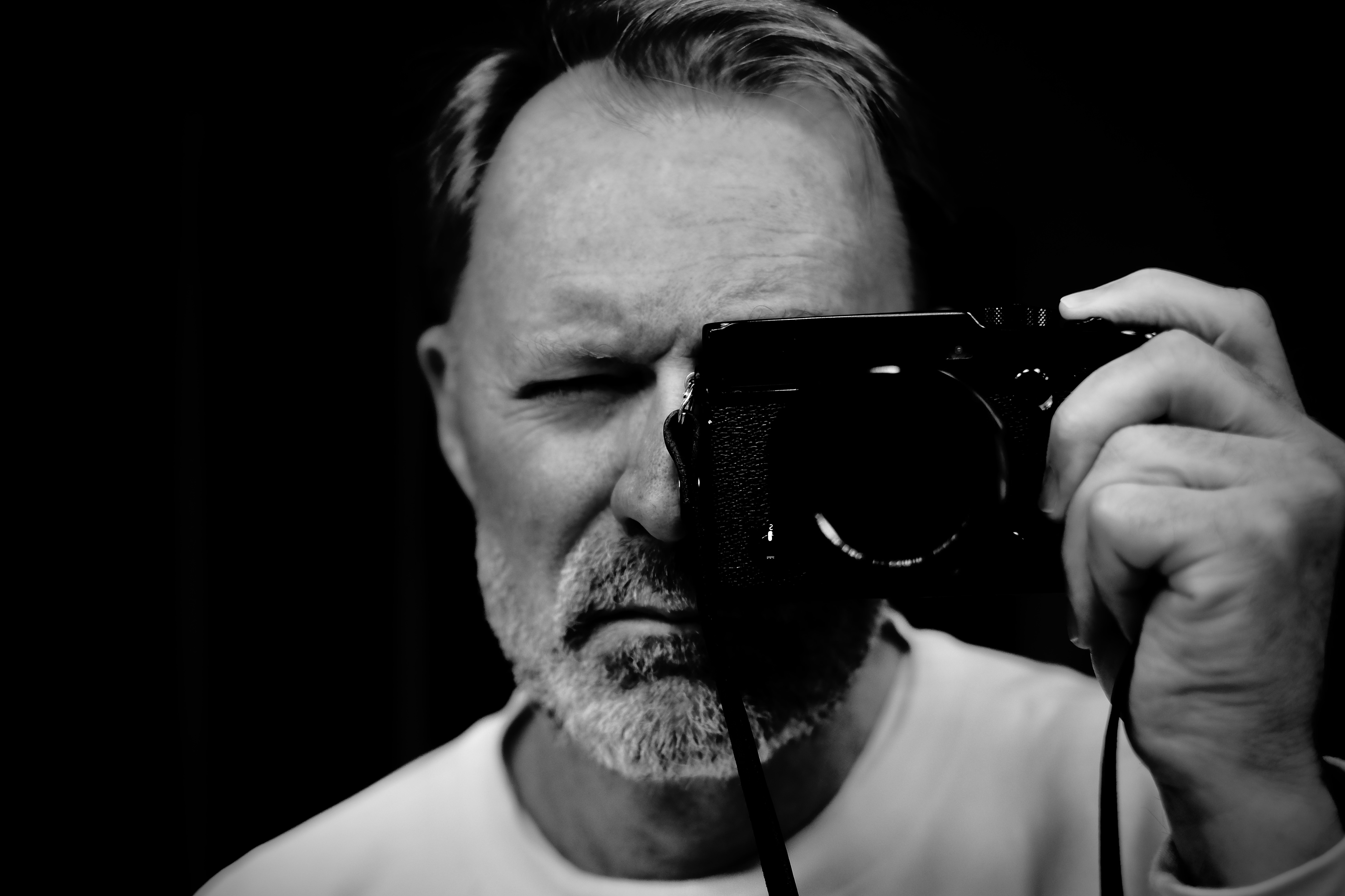
To Pierce the Veil of Selfish Consciousness
The peace that comes from finally being yourself

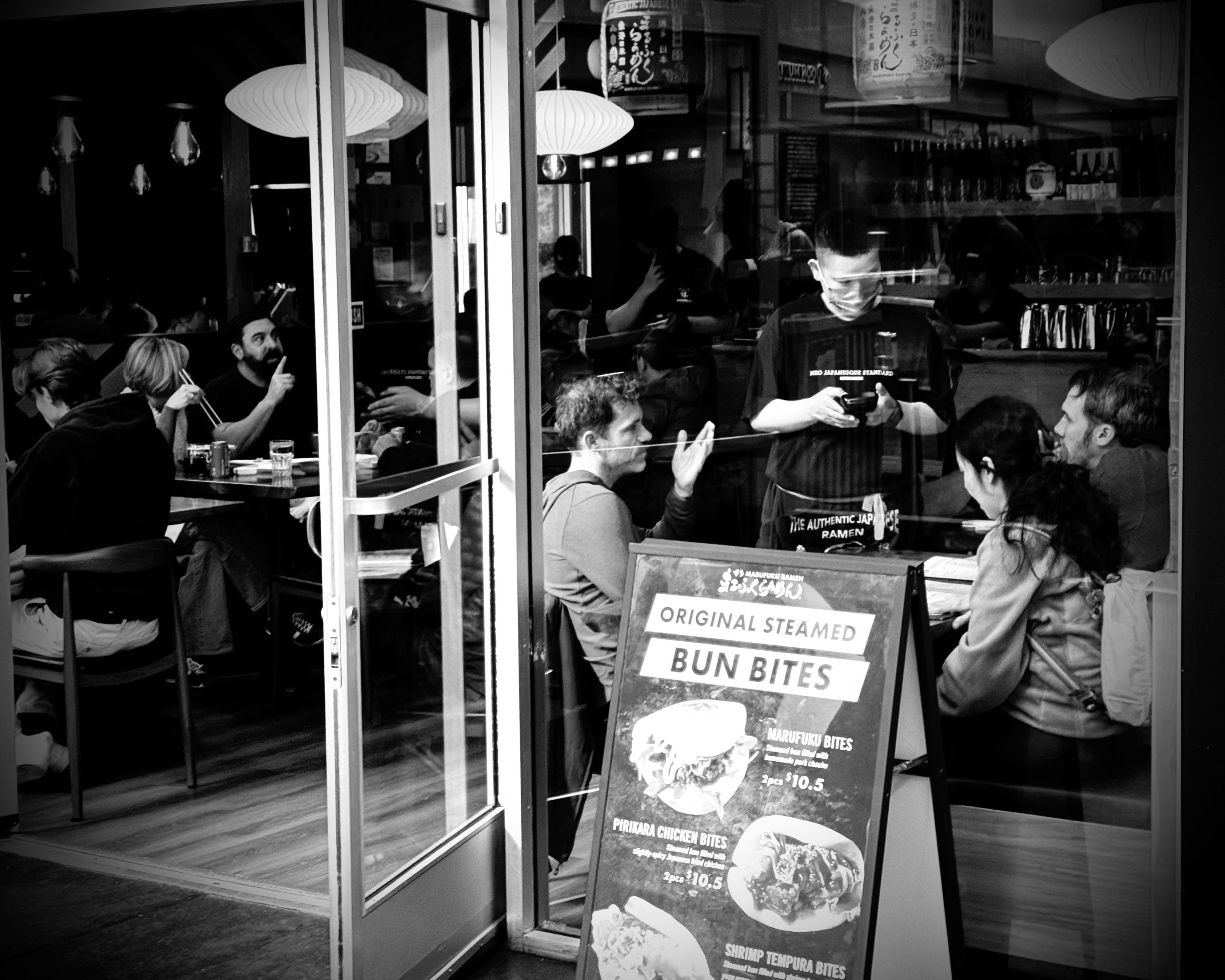
“What the heck are bun bites?” the man said.
“Honey, they’re Japanese steamed bao buns. They’re soft and stuffed with greens and pork belly and chicken or whatever. I’m pretty sure we had them in Seattle,” said the woman.
“Really? I don’t remember that. I thought ramen was noodles and soup and stuff.” He looked at his Rolex watch, held his hand above his eyes to shield the sun, and scanned for other dining options.
The couple were off to my left outside the Marafuku Ramen restaurant in San Francisco. I was changing the aperture on my rangefinder camera but couldn’t help eavesdropping.
“So you don’t want to eat here?” she said.
“I didn’t say that. I don’t know. What about a sandwich shop? Something less messy that I won’t get on my sweater,” he said.
“We can have sandwiches at home.” She looked annoyed.
“Yeah, I know, but steamed bun bites?” he said.
“It would be nice if you could step outside of yourself once in a while.” She fished in her purse, pulled out a pair of sunglasses, and slipped them on with resignation.
“Outside of myself?” His brow furrowed in a look of irritated confusion.
He was well-dressed.
Crisp white shirt, fitted cardigan sweater, pleated slacks, and Bruno Magli loafers. She was fashionable but in a comfortable, relaxed way. He came off as performative, as if he needed to project money or status or importance.
You could say he wore his ego.
The couple moved on but the woman’s words remained.
“It would be nice if you could step outside of yourself once in a while.”
I thought of my wife, who once told me that she gets to be whoever she wants to be when she travels. She might dress like the locals, enjoy their cuisine, and blend in. She might let loose her slight New York accent, acquired from time spent there in a past relationship.
When she travels she gets to step outside of herself.
I was once a part-time editorial cartoonist for the county newspaper. I attended the Association of American Editorial Cartoonists’ annual convention in Ohio. I was a full-time police officer, but during that trip to Ohio I was an editorial cartoonist.
A woman on the plane to Ohio asked what I did. “I’m an editorial cartoonist,” I said, which was true. It wasn’t the whole truth, but I didn’t care.
I had stepped outside of myself.
The late novelist Iris Murdoch was an Irish-British philosopher. She developed her own moral philosophy and a concept called “unselfing.”
The website philosophybreak.com shared the following:
“Murdoch thought our inner lives are too often clogged by what she calls the ‘fat, relentless ego,’ but that by contemplating beauty in nature and art, we can deflate the brooding, grasping self and open our eyes to reality.”
That foppish man in San Francisco, worried about messy bao buns dripping on his sweater. When he’s alone, gazing at a mirror, does he see his brooding, grasping self? Do his eyes ever fasten on the fat relentless ego that resides, to varying degrees, in us all?
In Murdoch’s moral philosophy, transcendence involves stepping outside of ourselves. Once the self is out of the way we can see the beauty of reality.
“The self, the place where we live, is a place of illusion. Goodness is connected with the attempt to see the unself, to see and to respond to the real world in the light of a virtuous consciousness. This is the non-metaphysical meaning of the idea of transcendence to which philosophers have so constantly resorted in their explanations of goodness. ‘Good is a transcendent reality’ means that virtue is the attempt to pierce the veil of selfish consciousness and join the world as it really is.”—Iris Murdoch
Murdoch focused on nature and art to help us step outside of ourselves, but I’d include travel, literature, spiritual pursuits, and new experiences outside the familiar.
Every year, Pico Iyer visits a small Benedictine hermitage high above the sea in Big Sur, California. He’s made over 100 retreats there.
Iyer has navigated many challenges in his life. Houses have burned down. A parent died. A daughter diagnosed with cancer.
Iyer leads a busy professional life as a best-selling author, TED talk presenter, and journalist. Yet, despite the successes and challenges in his life, he keeps returning to the inner stillness and solitude of monastic life.
The retreats help him step outside of himself.
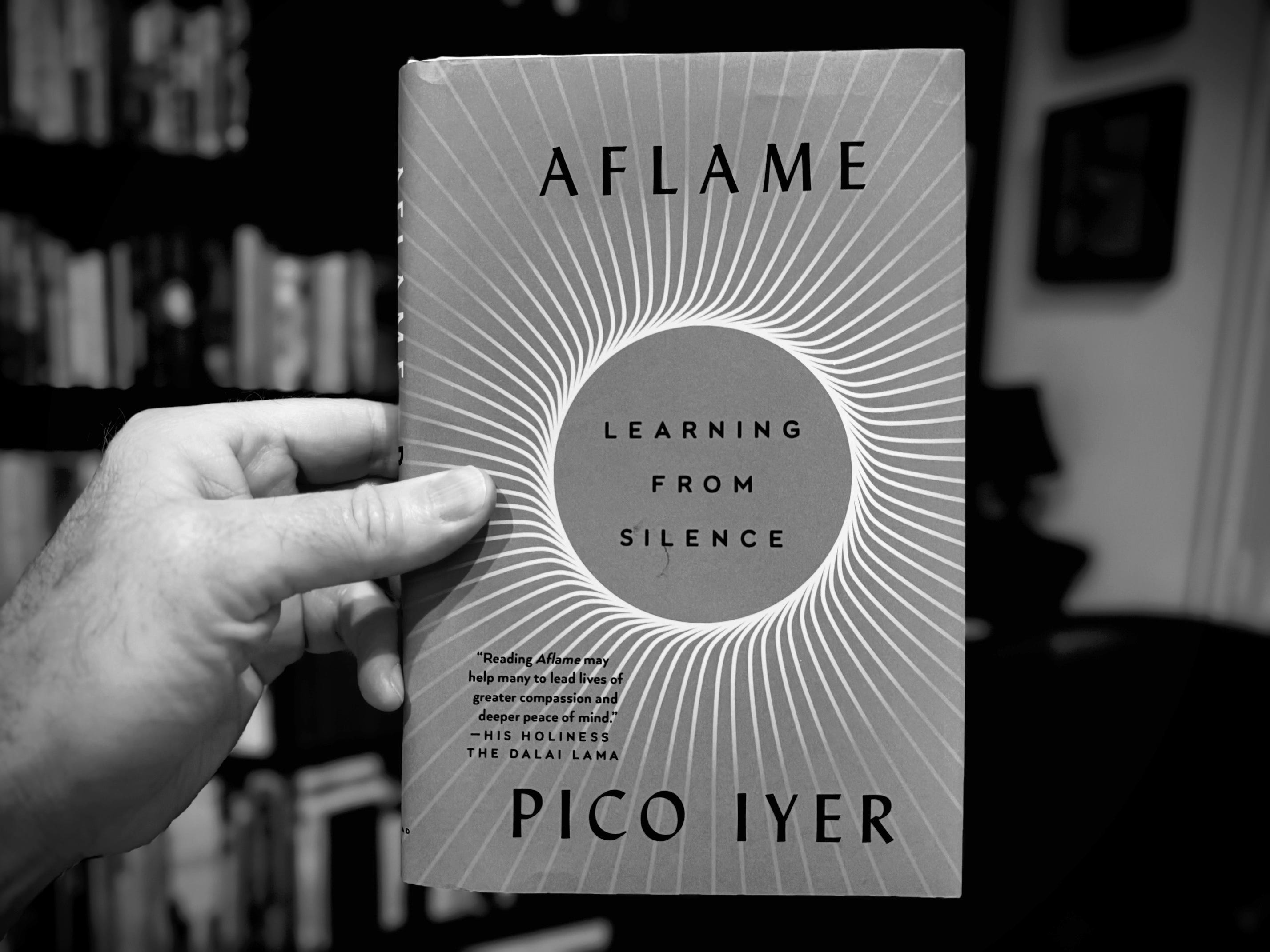
The inside dust jacket flap of his book Aflame: Learning From Silence, describes the monks he communes with as “…a group of selfless souls who have dedicated their days to ensuring there’s a space for quiet and recollection that’s open to us all.”
We hold so much of the world at arms length.
We hide behind facades. Our professional titles. Our social roles. The many faces we wear in different situations.
Sometimes, out of necessity, we need boundaries and a degree of professional detachment. And in a world where crime and dark hearts exist, we learn the value of caution and projected strength and even an aggressive posture.
We slip off our masks and drop the performance only when we feel safe. Only when we’re around loved ones.
But even then, sometimes we don’t.
There are some who rarely let down their guard. Who seldom step outside of themselves. Who forego a chance to be like a child again, free of performance and pretension and role playing.
They are hostage to their egos. Cut off from the beauty and light of authentic being, new experiences, and self-discovery.
All of us do this from time to time. But some are full-time prisoners of their egos, afraid to drop the mask, frightened by what true intimacy with the world really means.
Pico Iyer, writing about the monastery:
“Intimacy, I think, can be such a treacherous thing in the world: whom are you getting close to, and with what intent? Here it’s only the opposite—distance—that can feel like profanation.”
Everyone has a social self and a silent self.
We see the silent self sometimes in candid street photography. Whenever I go for a photo walk with my rangefinder camera, I look for people lost in thought.
Such images capture the real person, devoid of performance. There’s a stillness in them, and in those moments. We long for the peace of that stillness throughout our lives.
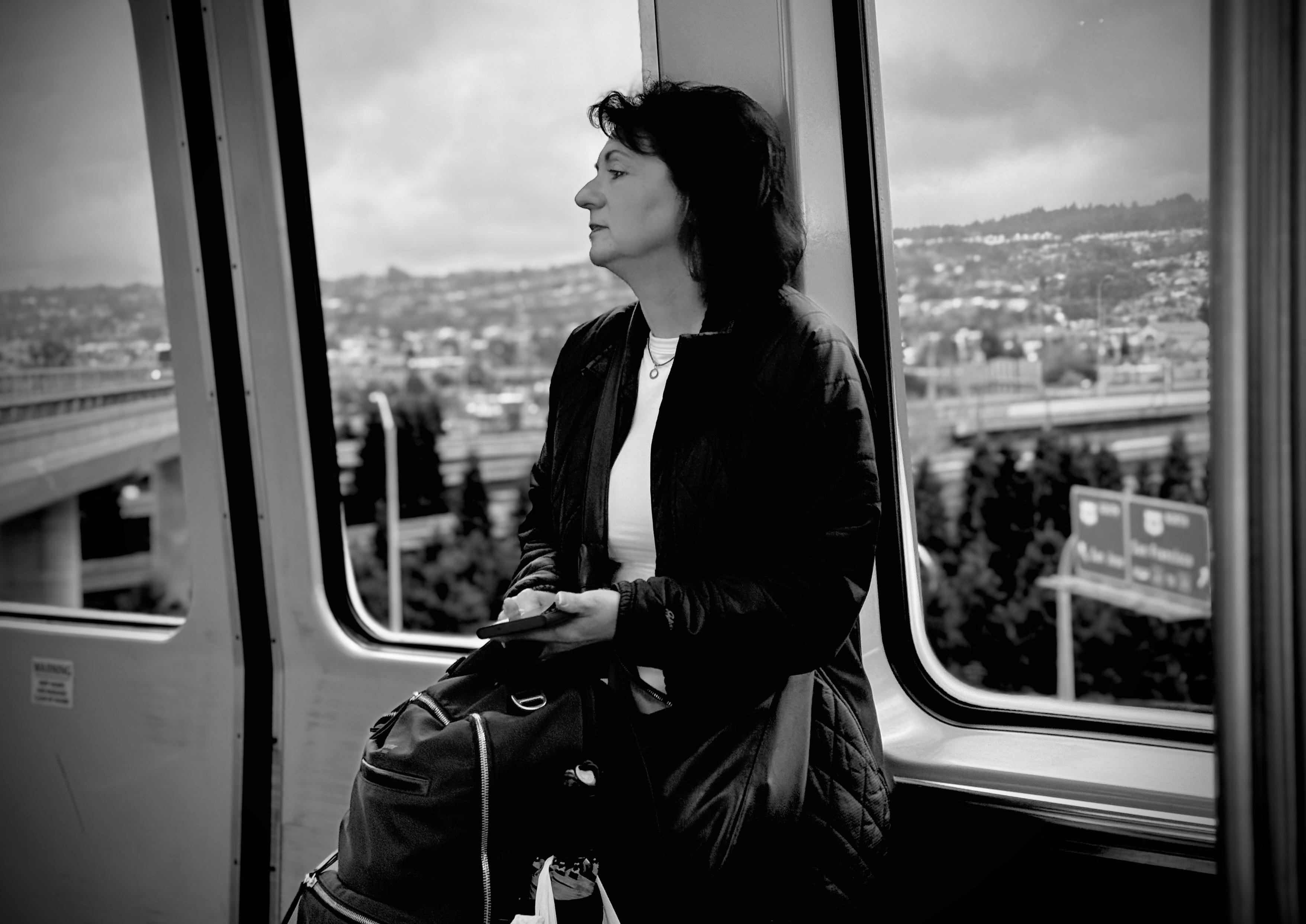
We long to be ourselves.
Iris Murdoch was on to something.
Everyone struggles with their fat, relentless egos and brooding, grasping selves. Yet everyone longs to experience beauty and goodness in their lives.
But the world’s accelerating technology and artificialities and seductive algorithms conspire against our better selves. They summon our selfish consciousness to lord over us.
I wish that couple in San Francisco, especially the gentleman dandy, had stepped outside of themselves and found a seat at the Marafuku Ramen restaurant. I wish they’d ordered delicious, messy, unforgettable, steamed bao buns.
I wish the guy had dripped the food all over his cardigan sweater and then laughed and asked his wife to take a picture. I wish he’d pierced the veil of his selfish consciousness and talked about his dreams. I wish he’d told her how much fun he was having, and that he never wanted their San Francisco trip to end.
If he did those things, he would have discovered a stillness in his heart.
He’d have found the peace that comes from finally being yourself.
Before you go
This journal continues because a few readers quietly support it. If these pages matter to you, a small one-time gift below helps keep the work going. Thank you for reading.
AI is where we abandon our creative voice. None is used in my writing.
Subscribe to Weiss Journal.