The Place Where the Light Enters You
We must cultivate our garden

It started as a dull ache in an upper right tooth. Painful battles can sprout this way, from unremarkable annoyances. Because I know this, I took preemptive action and phoned my dentist.
“Which tooth is it?” the receptionist said.
Before the call I had examined the tooth in the mirror.
“It’s the crown on the upper right side,” I said.
She pulled up my records and scans on her computer. “Oh yes, I see it. That one had a root canal, but we didn’t do the work. How long ago was it?” she asked.
“I don’t know. Probably several years. My old dentist in California. Why would it be aching if it had a root canal?” I said.
“Any number of things. Grinding. A crack. Infection. Let’s get you in,” she said.
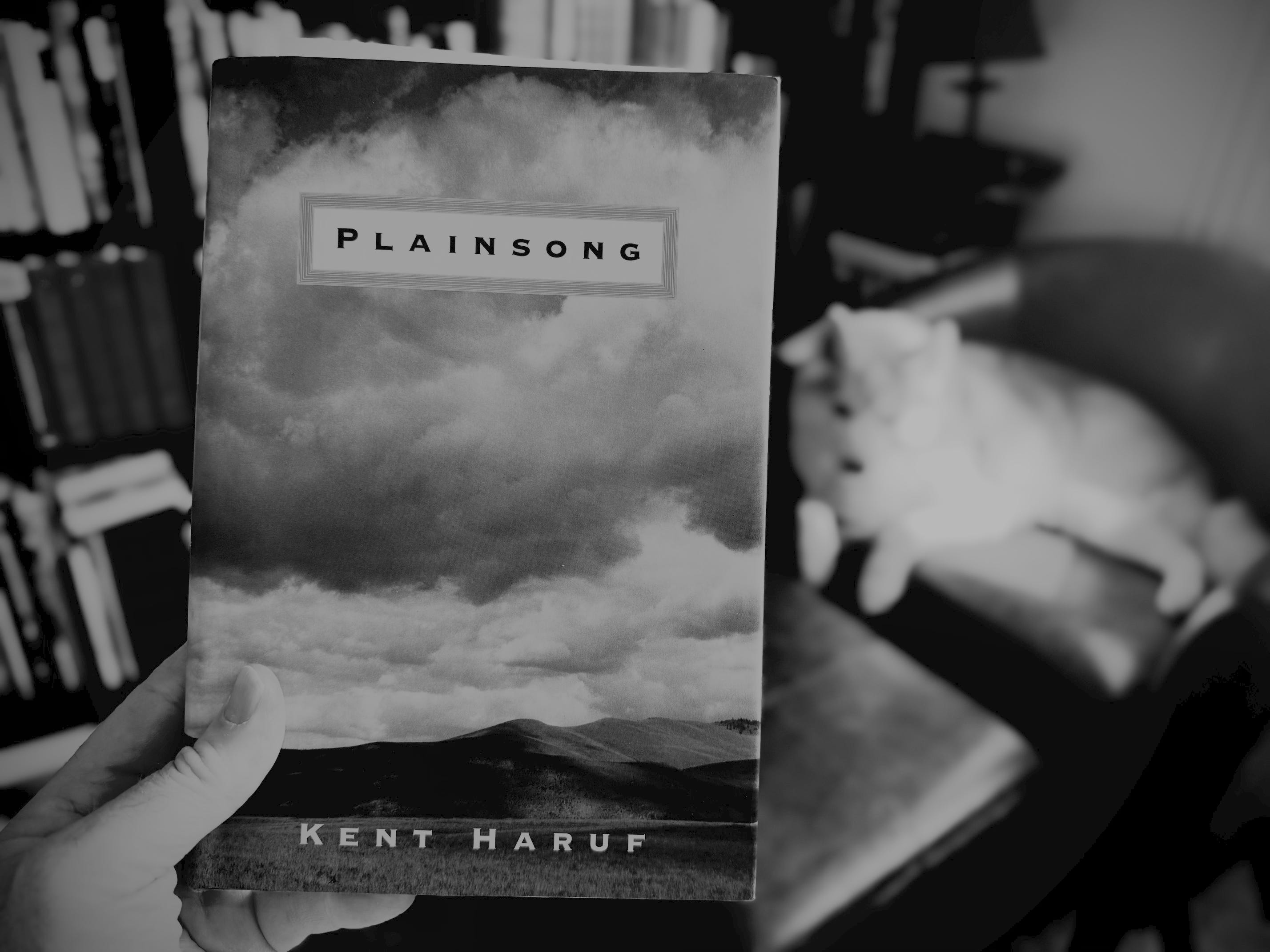
The appointment scheduled, I joined my wife in our home library and continued reading Kent Haruf’s poignant novel Plainsong. Nanuk, our 16-year-old Alaskan Klee Kai, settled his arthritic frame beside me. The afternoon sun warmed the room and Nanuk began mildly panting.
“His breath is getting worse,” my wife said.
“Yeah, I need to get him into the vet,” I said.
I’d been hesitant to do so. I already knew the problem. Nanuk had most of his teeth removed a few years ago. The remaining teeth had gone bad. But now, due to his age, there was concern he’d not survive anesthesia.
“At the least, maybe they can give him antibiotics to knock back the infection,” my wife said.
I phoned the vet.
The next day I took Nanuk to his appointment. The vet examined him and said, “Those remaining teeth have to come out. His lymph nodes in the neck are swollen. I’d like to do some preliminary blood work,” she said.
“If I recall, he has a heart murmur. The vet we saw a while back had concerns about him going under,” I said.
“Always risks. I’d like to do an ECG. If we leave those teeth in, the infection will spread,” she said.
“Alright,” I said.
An assistant came in and joined the vet. They took Nanuk out of the exam room to get his blood.
I sat there on the cold bench, in that sterile exam room, thinking of our little dog Chug. He was a chihuahua/pug mix whose old age summoned blindness and heart issues. On his last day, he experienced a seizure at home, and I raced him to this same veterinary office. A kind, young vet examined Chug and confirmed what I already knew, that it was time. It was so very hard because Chug had come out of the seizure and was leaning his warm body calmly in my arms on the exam table, his little ears alert. His blindness was a kind of saving grace, as he couldn’t see the syringe and drugs the vet was about to administer. The vet assured me that Chug would peacefully drift off, which is exactly what he did as his body melted into my arms. And then the vet gave him a second drug, and Chug’s heart, which had always been a lion’s heart of love and loyalty, thumped down to that silent oblivion where memories and eternity coalesce.
I wiped my eyes and rubbed the right side of my jaw.
The vet returned with Nanuk and said she’d call with the lab results. If they were promising, she’d recommend dental surgery next week. “We’ll do the ECG then, right before the surgery, to rule out cardiac concerns,” she said.
The lab work, tests, surgery, and medications would cost nearly 2K.
I got in to see my dentist.
It didn’t take long. A few scans and he brought up the results on the overhead screen.
“You’ve got an abscess. See this area here? It’s a mess. Let’s get you on some Amoxicillin. Once it kicks in the pain will go away. Then off to the endodontist, to redo that root canal. Afterward, I’ll follow up and fit a new crown,” he said.
My law enforcement retirement pension includes an excellent medical plan, but not dental. I pay out of pocket, just like I do for veterinary visits.
I handed the dental receptionist my credit card and later picked up the prescription at the pharmacy. Ibuprofen for the pain had been somewhat effective, but less and less so.
The day came for Nanuk’s surgery and I dropped him off. Gave him a hug while the veterinary assistant waited. Then the vet joined us.
“We’ll take good care of him,” the vet said. It was a different vet from the woman I saw previously. This was the same vet who’d taken care of Chug on his last day.
I put that out of my mind and drove home.
Later the vet called to tell me that the ECG was clear and that they would go ahead. He called back thirty minutes later while Nanuk was still under to report that indeed all the teeth had to come out. One upper canine was so infected that a fistula had burrowed from it all the way to his inner nostril. The tissue had deteriorated, and stitching it together would be tricky.
Poor Nanuk, I thought. Nothing is ever easy.
Time passed and the vet phoned to say Nanuk had awakened. In recovery and doing well. They’d even taken him on a short, outside walk to relieve himself.
At the end of the day I was able to take him home, along with his liquid antibiotics and pain medications. We both settled onto the couch, where Nanuk napped and I read Plainsong and swallowed my Advils and Amoxicillin.
“You two are a sad pair,” my wife said.
On Friday the pain from my abscess had grown significantly worse despite the antibiotics and painkiller. I phoned my dentist.
“When is your endodontist appointment?” the receptionist asked.
“Not for another ten days. It was the earliest they could get me in,” I said.
“Let me give them a call,” she said.
She phoned back in ten minutes. “They had a cancellation and I got you in this Tuesday.”
“Bless you,” I said.
“The antibiotics should kick in and you’ll feel a lot better,” she said.
I thanked her again, optimistic that things were on the upswing.
But then Nanuk started bleeding profusely from the mouth.
C. S. Lewis, in The Problem of Pain, wrote, “Thomas Aquinas said of suffering, as Aristotle had said of shame, that it was a thing not good in itself; but a thing which might have a certain goodness in particular circumstances.”
As my tooth ached and I drove my bleeding dog to the vet, I failed to see what “certain goodness” could be found in our “particular circumstances.”
It just felt like suffering.
In Christian theology, suffering can be offered up to unite the sufferer with the passion of Christ, serving as a means of purification and spiritual refinement. Buddhist philosophy distinguishes between pain, the unavoidable “first arrow” of life, and suffering, the “second arrow” created by our stories and resistance.
Pain may be inevitable, but the suffering can be used as a meditation on the nature of attachment. The poet Rumi once wrote, “The wound is the place where the Light enters you.”
My infernal aching tooth, my physical suffering, was compounded by my concern for Nanuk. My fear that something bad might happen to him.
But it was more than that.
Recently, I published an essay about a dear childhood friend who is fading away into the shrouds of early-onset dementia. Visiting him called up memories of an old law enforcement colleague struck and killed by a drunk driver. And memories of my parents, gone now for many years.
Sometimes physical pain and stress erode our emotional constitution.
There’s a cumulative effect that digs past our well-being and armor, burrowing to those subterranean levels where the soil of our souls is most fragile. Maybe this is why, whenever in my life I’ve been sick in bed and physically weak, my emotions are so easily unearthed. All it takes is a sad film or moving song or poignant novel and then, much to my surprise, a flood of emotions pours out.
But if I’m honest, those emotional outpourings have always been cleansing and therapeutic. Almost a necessary purging, like when reptiles shed old skins or birds molt their feathers.
So that renewal can happen.
It was quite the scene at the vet.
I led Nanuk in on his leash as he left a trail of blood all over the tile floor. I overheard a woman say, “Oh no, that poor baby!”
“He had dental surgery here yesterday. I think he busted some stitches,” I told the receptionist.
She picked up the phone, and almost immediately someone from the back came out. Then a vet I haven’t met introduced herself and said, “We’ll take him back and figure out what’s going on. Why don’t you have a seat here in exam room number three.”
I closed my eyes in exam room number three and waited, trying to ignore the pain in my tooth.
Sometime later the vet came in and said, “Okay, we were able to stop the bleeding. He’s doing fine.”
“I don’t know what happened,” I told her. “He was licking his paws and suddenly started bleeding everywhere.”
“That fistula we repaired had a lot of weak tissue around it, and it’s going to be fragile and prone to bleeding. We’d like to keep him tonight and monitor the situation. If all goes well, you can pick him up tomorrow morning. Just be sure to keep him on soft foods for the next two weeks,” she said.
“Thank you, Doctor,” I said.
I went home and gave my wife an update. Then I swallowed a few more Advils and lay down. My tooth pain was getting worse.
The next morning I picked up Nanuk. He still had some faint blood stains on his white paws where the veterinary staff did their best to clean him up. But otherwise, Nanuk was anxious to come home.
We both spent the day resting. I took him for a short walk, careful not to overdo it. The hardest part was administering his liquid antibiotics with a syringe, being careful not to clip his stitches.
Nanuk spent a great deal of time sleeping. Dogs know when they need to heal. But when he was awake, I had to watch him constantly to make sure he didn’t lick his paws and start bleeding again. At night, I lay on the couch beside him.
My dental pain grew worse, and I barely slept.
I’d count the hours between Tylenol and Advil doses. I’d swish warm salt water in my mouth. I’d hold an ice pack outside my tooth. I’d massage part of my gums with my finger. Anything to lessen the throbbing and unrelenting pain. Sometimes, the pain in my tooth would radiate to other teeth. I began to doubt that the Amoxicillin capsules I was taking three times a day would ever kick in and tamp down the infection.
On the second night, desperate to ignore my pain and suffering, I put on headphones and listened to all thirty chapters of Voltaire’s Candide. Somehow it managed to distract me.
In the novel, Candide suffers endlessly chasing meaning, love, and explanation. And after all that chaos, the conclusion the book offers is that “We must cultivate our garden.”
We must maintain the things that matter.
This reminded me of the McPheron brothers in Kent Haruf’s novel Plainsong. The brothers are old farmers. They lost their parents when they were young. Never married. All they’ve ever known is the cattle farm they live on and maintain. They’re gruff and set in their ways.
They’re the last men you might think of to help a teenage girl in trouble.
And yet, when a teenage girl named Victoria becomes pregnant and abandoned by her boyfriend and her mother, she turns to a high school teacher for help. The teacher puts her up for a while but eventually asks the old McPheron brothers if they’ll help.
Of course the brothers know nothing about women, much less pregnant teenage girls. All they’ve ever known is farming. “Who’s the sire?” they ask about the baby’s father.
But the McPheron brothers know about pain and suffering.
They’ve not only witnessed it on the farm, caring for their animals. They’ve also had first hand experience, losing their parents as young boys. Loss like that never leaves a person, but sometimes suffering and pain have a “certain goodness in particular circumstances.”
The McPheron brothers agree to take in young Victoria.
They set aside their parents’ old bedroom for her. They cradle her in love and protect her tenderly like a fragile bird in their hands. They take her shopping, buy her the most expensive baby crib.
They know what it means to cultivate their garden.
Nanuk had a few more bouts of bleeding, but eventually it stopped. And blessed relief came to my tooth on the third day of steady antibiotics. It was still tender to chew with, but at least the incessant throbbing had receded to a dull ache.
The day of my endodontist appointment came around.
One normally doesn’t look to an endodontist appointment and root canal with alacrity, but I was anxious to put all this pain and suffering behind me. The endodontist was friendly and employed the latest technology, including some fancy laser therapy that kills bacteria.
After it was all done the young receptionist smiled and said, “That’ll be $2,020.” I handed her my credit card.
“If you use a credit card instead of your bank card, it’s an extra two percent fee,” she said.
“Of course it is,” I said.
Back home, Nanuk was ready for a walk.
It was good to see him on the mend, but I was still dragging. Those painful nights of no sleep had caught up with me. And even though my abscessed tooth had been treated and repaired, the endodontist said to finish the antibiotics and expect it to be sore for several days. Also, I still faced another thousand dollars or so follow-up with my regular dentist, who’d called to schedule a time for me to get a new crown fitted.
I swallowed a few more Advil and took Nanuk for a walk.
Later I sank onto the couch and read the remaining, beautiful chapters of Plainsong. How I loved the McPheron brothers. Their kind hearts and deep humanity.
They made me think of my dear friend, the one who is disappearing into himself. The one who used to visit my parents on their wedding anniversary, every year, and drop off flowers.
Such a sweet, kind soul.
And thus, in my weakened state, a melancholy washed over me. It’s a melancholy that often finds its way into my writing. And while pathos has its utility in creative work, one has to be cautious. One mustn’t get lost in it. One must continue to cultivate the garden.
Keep an eye out for the sunshine that entices flowers to grow.
Early that evening, in the midst of my fatigue, my phone buzzed. A text from an old childhood friend. Unexpected and perfectly timed.
We don’t talk often anymore. Different states. Different lives. But I’ve known him longer than anyone. Since we were boys.
He sent a photo of us at his family’s swim club, sunburned and grinning. He’s making a goofy hand signal as I stare at him, bemused.
Below the photo he wrote:
“Still my favorite pic of all time. I hope u and ur family are doing well. Come up north and let’s get a tattoo related to friends. I need one more and I think u need one. Thanks for being my lifelong friend.”
I stared at the message for a long moment before responding.
There are people in this world who, without knowing it, arrive exactly when they’re needed. The McPheron brothers were like that. As is my friend grappling with dementia.
And my oldest buddy who sent the text.
I texted back and thanked him. Told him I loved the photo. That we’re overdue for another visit.
And I added the words, “Thanks for this.”
Nanuk stirred beside me and looked up with those soft, trusting eyes. I rested my hand on his head and felt the quiet rhythm of his breathing. It had been a long week of pain, worry, and expense. None of it had offered any clear lesson, just the blessings of care, memory, and the simple act of someone reaching out.
Perhaps that is what matters.
We don’t need to understand suffering or try to give it meaning. We just need to cultivate our garden. Tend to what has been placed in front of us. Answer it with attention and love.
Somewhere between the fading ache in my jaw and the soft weight of Nanuk’s warm body beside me, I closed my eyes.
And we both fell fast asleep.
Before you go
If these essays speak to you and you’d like to support my work, consider a one-time gift below. I’m grateful for your interest and support.
Subscribe to Weiss Journal.
Visit my Noticings.