
The Eye Is the Lamp of the Body
The light we find in strangers

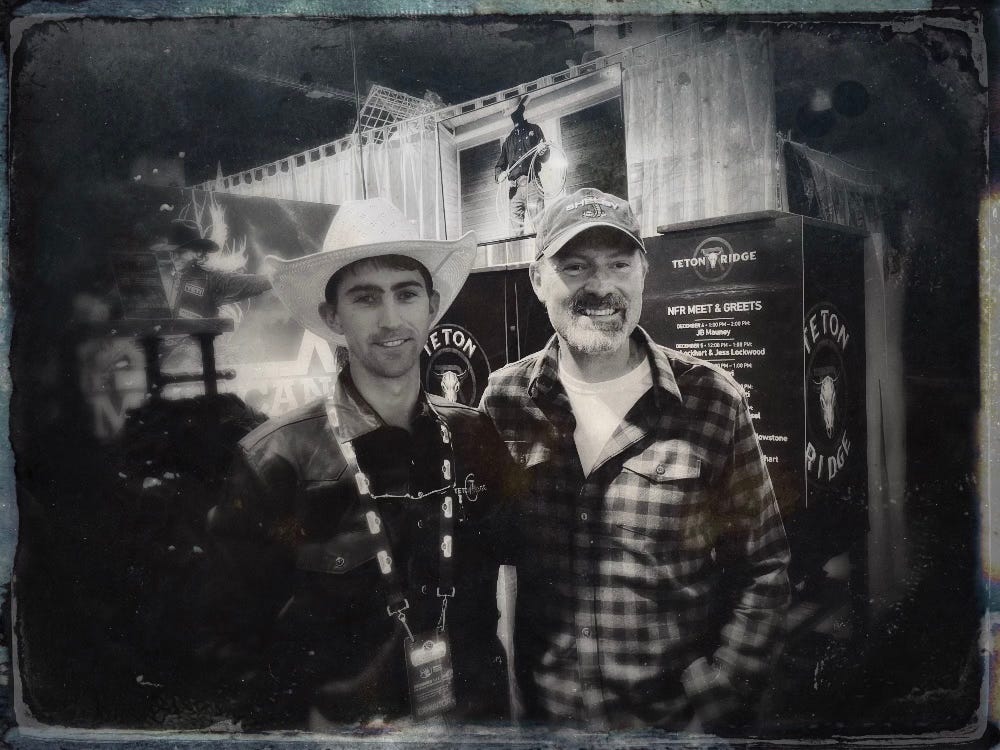
It’s not every day you meet a real cowboy.
One who rides angry two thousand pound behemoths full of muscle and violence and horns anxious to maul. The average bull rider, still in his late teens or early twenties, weighs little more than a hundred and fifty pounds. The enraged bulls they strap themselves to are ten times their weight.
Creatures built to break men.
Consider Lane Frost. He died of massive internal injuries after a bull named Takin’ Care of Business struck him in the back with its horn. He had completed a successful ride and dismounted. He landed in the mud within the bull’s line of sight. The beast struck him with a force that broke ribs and severed an artery. He managed to stand and take a few steps before collapsing.
He was twenty five.
His death is why professional bull riders wear protective vests now. Still, death is never far when you tempt fate on the back of a behorned monster.
I did not know these facts the day I met the young cowboy.
My wife and I were wandering the south hall of the Las Vegas Convention Center during the annual Cowboy Christmas show. I had my Fuji rangefinder with me and was clicking away when I spotted the PBR booth and a real cowboy standing beside it.
“So you ride those beasts?” I asked.
“Yes sir,” he said, offering a firm handshake.
“You have my respect,” I said.
“It’s a hoot, sir.”
Like a starstruck teenager I asked for a photo. There was something in the young man’s eyes. A reserved politeness. A radiance beneath it that felt like goodness and life affirmed.
I handed the camera to my wife. She took the shot.
It felt good to meet a real cowboy. I respected his courage, despite the fact that I view bull-riding as cruelty to animals.
My wife knows when to wrest me away from myself. I have monastic habits. I like the sanctity of my office, my books, my quiet places where words gather and stories take shape. She knows this. She also knows that a writer cannot rest forever on past adventures.
A creative saw grows dull if it never cuts new wood.
“Grab your camera, we’re going out,” she’ll say. I have learned that she is right about these things.
Writers need experiences. Which is how I found myself at Cowboy Christmas. How I met that young cowboy and felt the clarity in his gaze.
The eye is the lamp of the body.
Whenever I follow my wife out into the world, I look into the eyes of the people I meet. As a young cop I was taught to watch the hands but also the eyes because they tell you much.
Like the morning a frightened girl told the principal she had almost been abducted. Patrol officers scoured the town for the suspect. I was assigned to interview the girl and produce a composite sketch.
I knelt to meet her gaze. I saw fear and uncertainty and something else I could not name. She fed me details. I drew quickly. Each time I asked if I had it right she nodded with earnest conviction.
“Yes, that’s him. That’s what he looked like,” she said.
It was too easy.
I set the sketchpad down and looked into her eyes. She looked away. I said her name softly and she returned my gaze. That was when I saw the thing behind her fear. The thing shaping this story she had told.
Calculation.
“You know, sometimes we don’t want to get into trouble,” I said. “Sometimes we say things to save ourselves.”
“Yeah.”
“And if we make a mistake, it’s best to own up to it before things get out of hand.”
“Yeah.”
Her eyes softened. The calculation faded. Soon the truth poured out. She had been late before. She got distracted that morning. She feared more trouble. So she invented the story.
Relief washed through her. The eyes tell you when the burden lifts.
All that remained in her eyes was a kind of quiet penance.
Composite art school taught me to hear truth behind unlikely words. To listen for the soul behind the eyes.
Part of the training focused on interview skills. A sketch is only as good as the witness describing it. We were taught to do more than gather facial features. We were taught to study the person’s eyes as they spoke.
People’s souls reside behind their eyes.
Sometimes the eyes tell you there are lies beneath the surface. More often, in the case of victims and witnesses, the eyes radiate with truth. We were taught to trust that truth even when it seemed impossible.
For the final exam in composite art school we interviewed fellow students who had been given a photograph of a “suspect.” They had one minute to study the image before it was taken away. Then they described the person to us and we drew the composite.
My partner described a man whose general features were ordinary enough. Afro. Scar on his forehead. But then she added something that stopped me.
“His eye was all messed up,” she said. “Like one eye was bigger and pushed toward the end of his face. Almost like an elephant sat on his head and squished it.”
I set aside my disbelief and drew the man she described.
The result looked strange. Artistic ego has no place in composite work. The job is not to make a pretty portrait. The job is to draw a memory.
When I finished she looked at the sketch and said, “You nailed it.”
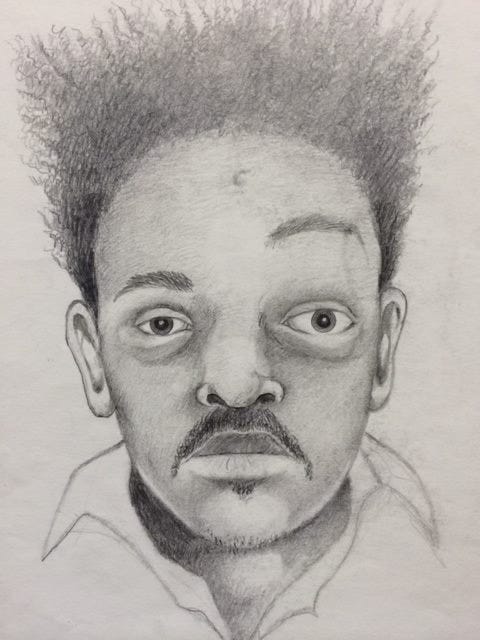
I doubted her. Until the instructor held up my sketch beside the original photo and smiled. She handed them back to me and said, “Well done.”
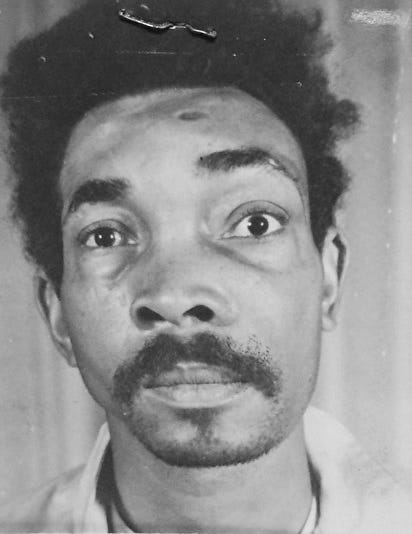
Those two images appear here for that reason. To show how truth sometimes arrives in unlikely form, and how the eyes can guide us even when the mind hesitates.
Ever since composite art school, I pay closer attention to eyes.
Another night my wife took me to an outdoor center filled with holiday lights and music. Performers played violins under the glow of Christmas decorations.
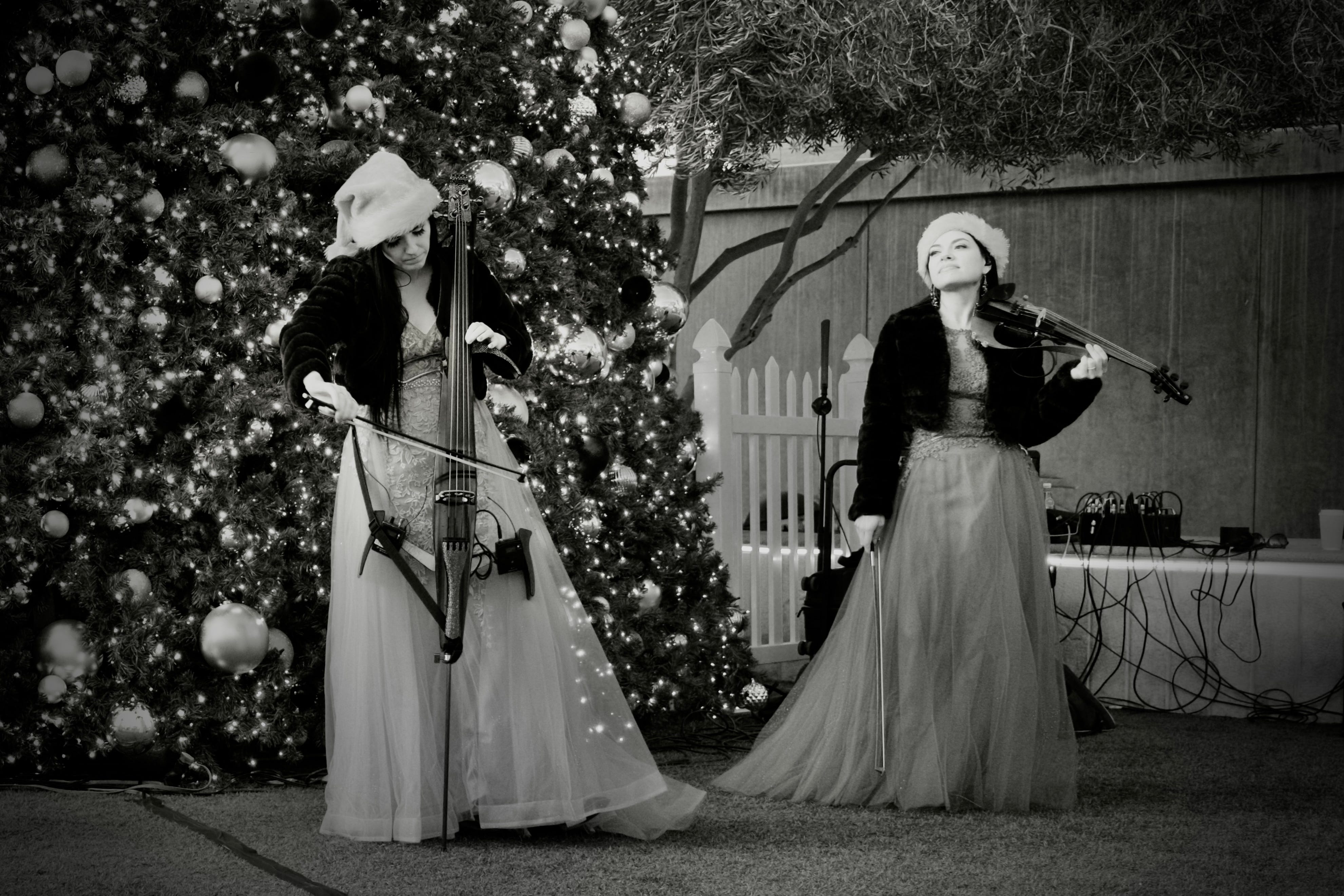
Even from a distance I saw the glint of joy in the performers’ eyes. It radiated outward, warming the gathered crowd.
Nearby, a woman held a small dog in a sweater. The little creature seemed as mesmerized as the rest of us. His eyes were bright and content.
“You two look great, do you mind if I take a photo?” I asked.
The woman hesitated. I saw the question in her eyes. Can I trust this man.
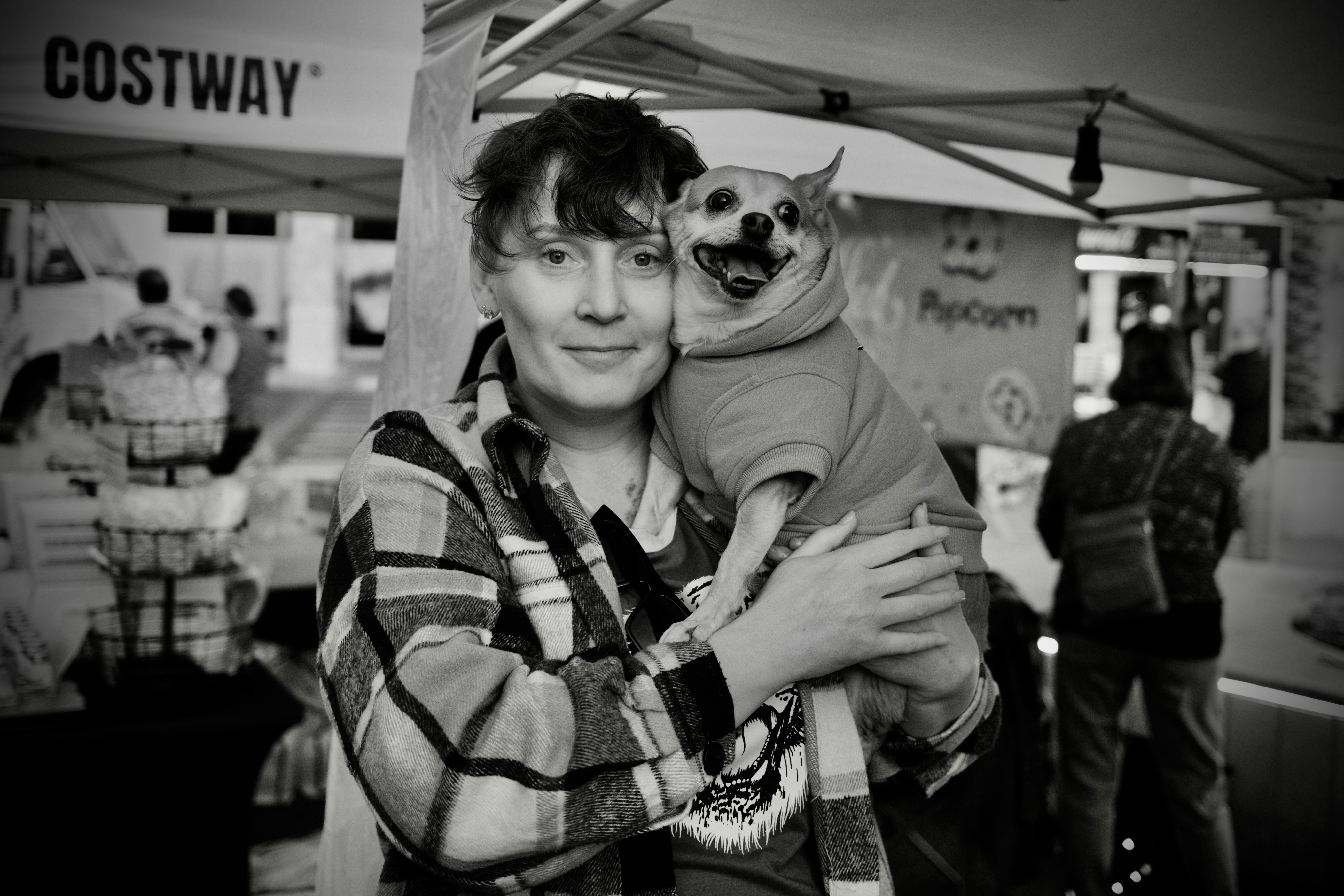
“I’m a writer,” I said. “I take candid street photos. They inspire my work. Only if you are comfortable.”
Her eyes shifted.
Wariness eased and she agreed. I took the photo and thanked her. As we walked away I wondered what stories lived behind her cautious, intelligent gaze.
It was chilly and we were getting ready to go home.
As we crossed the street there was a beautiful, white, horse-drawn carriage parked by the curb. Folks were getting ready to climb aboard for a ride through the center. It was quite festive.
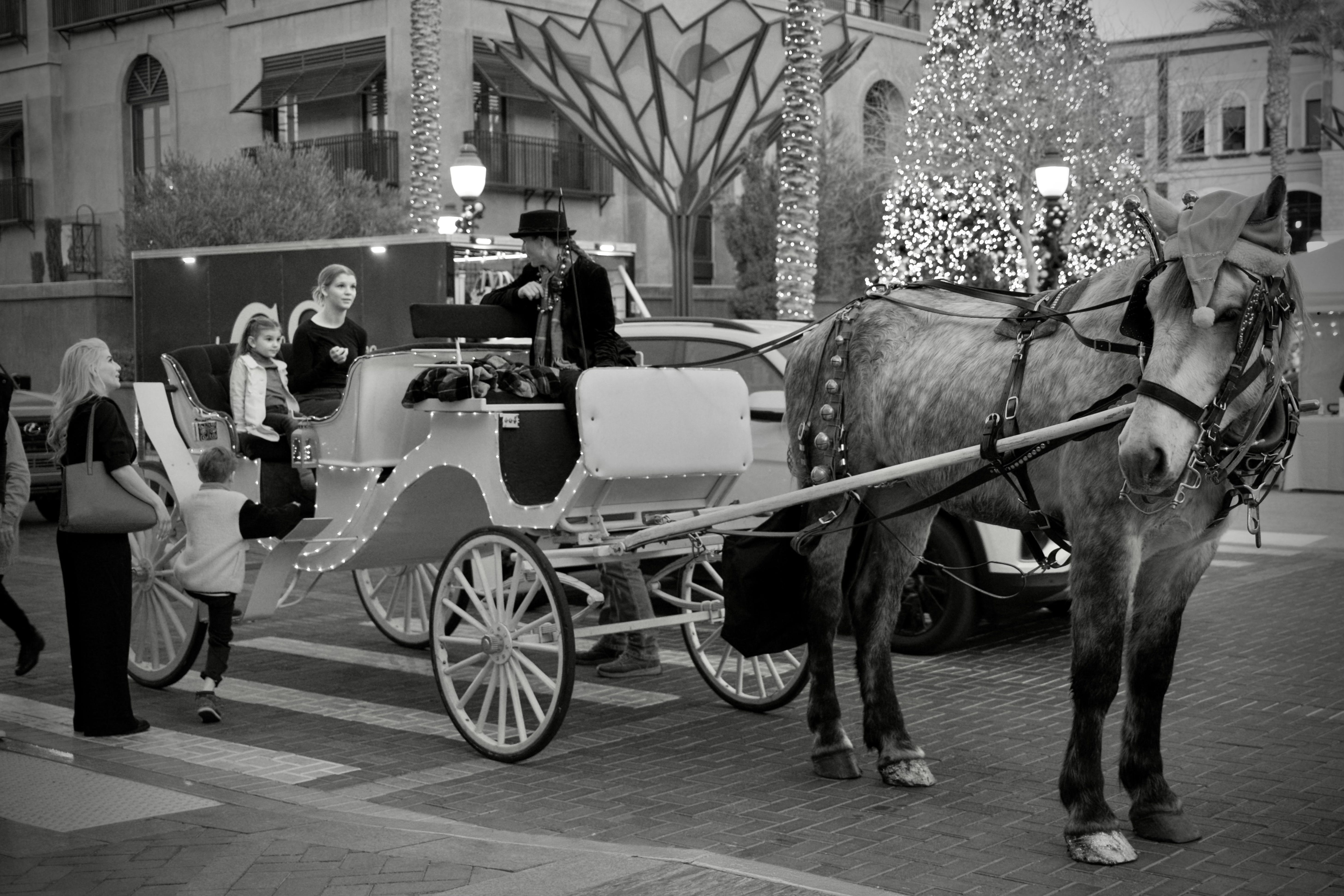
I raised my rangefinder and captured the moment.
We looked in some shop windows and strolled around a little longer and finally made our way back to the car. The horse-drawn carriage had circled around the center and stopped not far from where we were parked.
And that’s when I saw him.
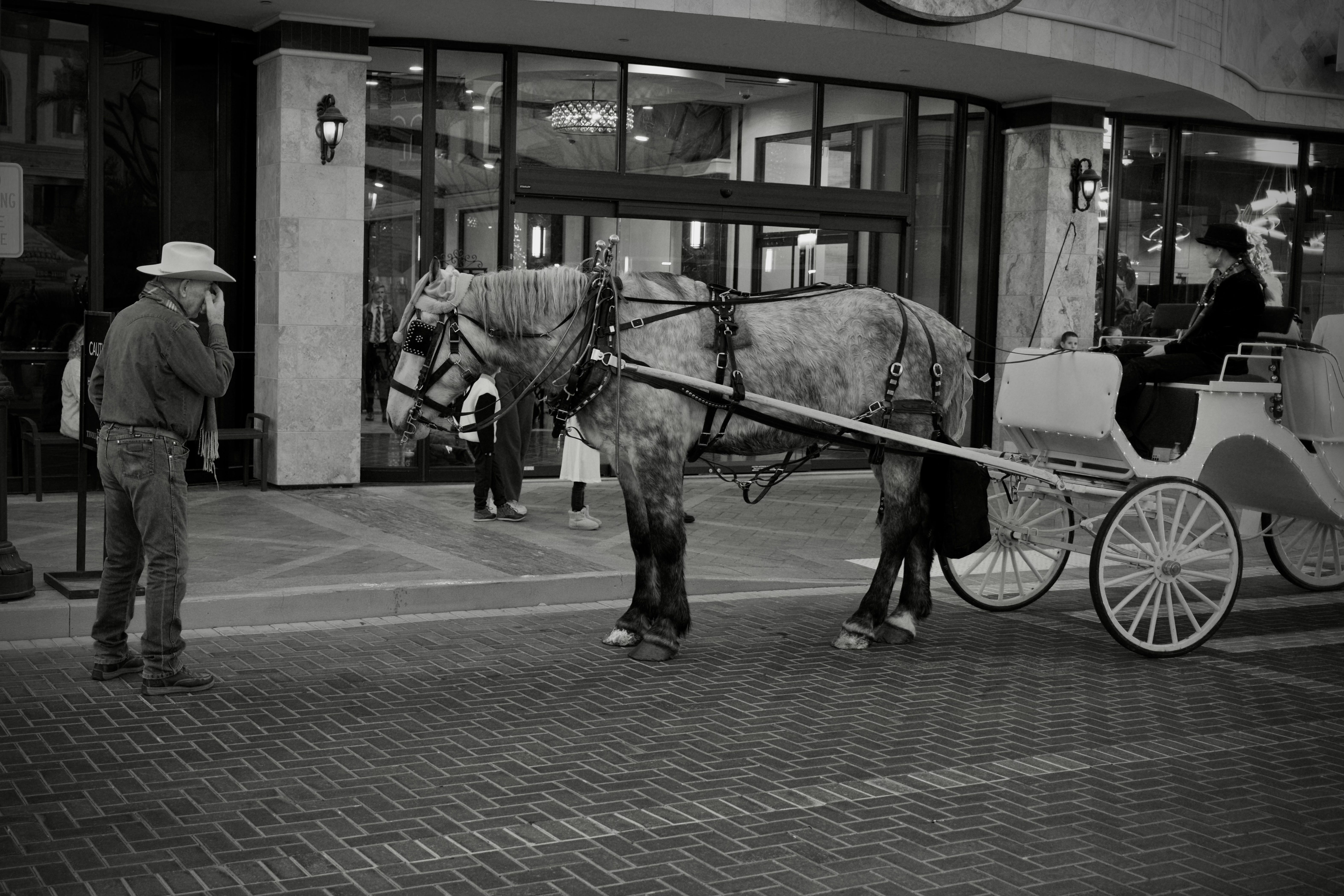
An old cowboy. Seventies perhaps. Rugged jeans. Scarf. Weathered hat. He looked cut from another century. He kept to the edges of the crowd, slipping behind beams and trees and reappearing without notice.
Our eyes met for a breath.
His were blue and watery from the cold. Intelligent and tired and wise. There was kindness in them. The same kindness I had seen earlier that day in the young bull rider. A quiet readiness. A willingness.
The eye is the lamp of the body.
I am grateful my wife pulls me from the cloister of my study.
I may grumble, but I am better for it. After hours of reading and writing, I sometimes wash my face and look into my own eyes in the mirror. I see contentment there. Gratitude. The tired happiness of a man who knows he has been given much. Family. Work that matters. Memories of those who shaped him and now reside in the heart.
In the end, this is what we seek in the eyes of others. Love, even when unspoken. The glint of goodness in neighbors. The warmth we sometimes glimpse in strangers.
It is what I saw in the young cowboy and the old one. What the frightened girl felt for her parents. What dwells in my wife’s eyes even when she is irritated with me.
Love burnishes the eyes from within. Its warmth lifts others. Makes them feel less alone. The eyes become lanterns leading us through the darkness toward whatever light remains in this world.
Pay attention to eyes. Yours and theirs. They hold great power if used with care. They are the nearest doorway to the soul we possess.
Use them wisely, before they close forever.
Before you go
This journal continues because a few readers quietly support it. If these pages matter to you, a small one-time gift below helps keep the work going.
Thank you for reading.
Subscribe to Weiss Journal.
John, you have a wonderful gift. The weaving of these experiences together to remind us of what is important. Thank you for sharing.
Wow! John, although I always knew this about the eyes, you put it down so well. You have elevated their importance. It is also good to remember that the kindness, love and understanding that we look for in the eyes of others are exactly what they are looking for in our eyes.