
Open Your Eyes Before They Close Forever
The art of noticing

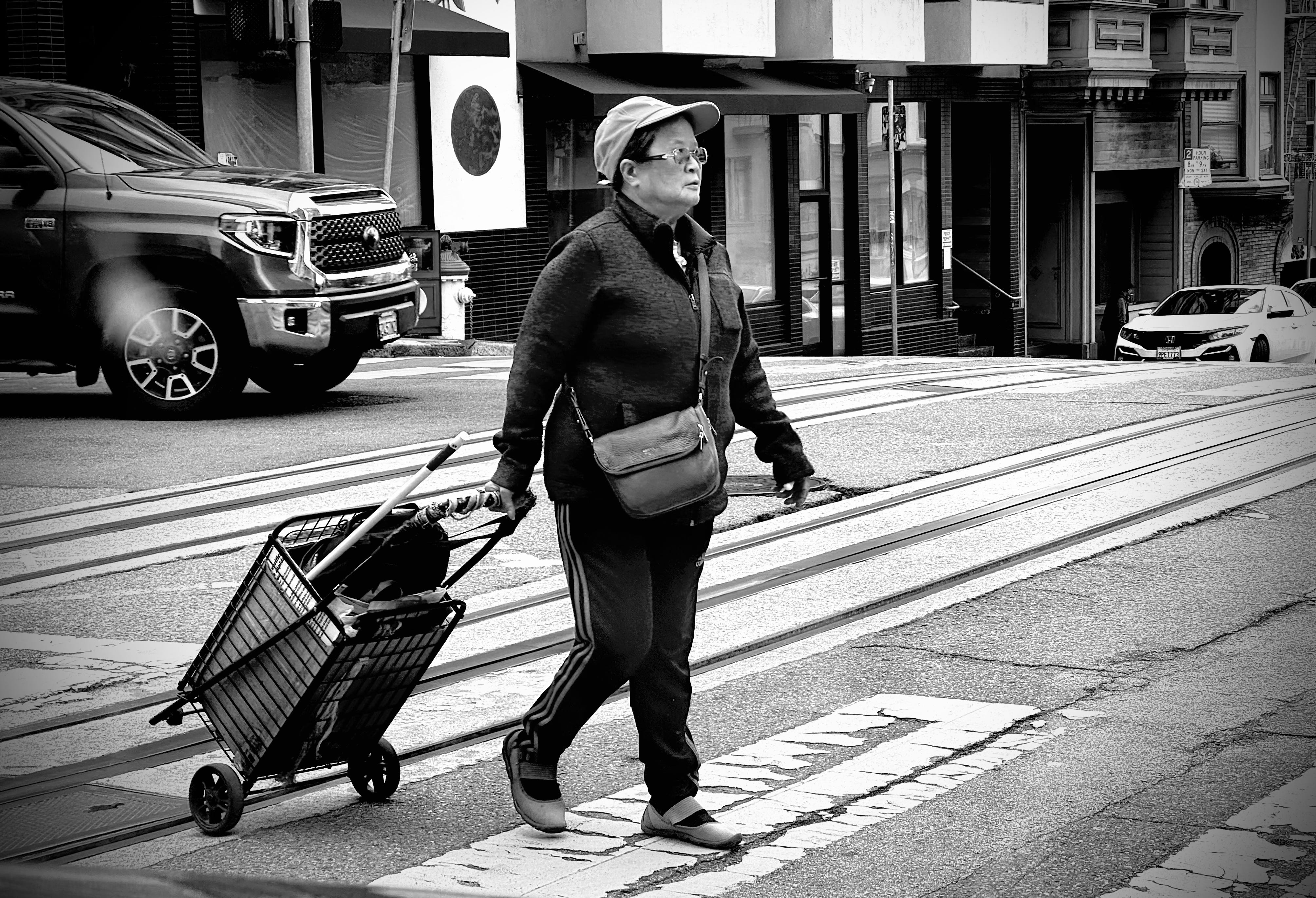
Anthony Doerr’s Pulitzer Prize–winning novel All the Light We Cannot See contains the following line:
“Open your eyes and see what you can with them before they close forever.”
The line is delivered by a Frenchman on a radio program and serves as a central thematic idea for the entire book. It speaks to the importance of perception, appreciation of life, and the fleeting nature of time.
I love the line because it’s about the art of noticing, which is the reason I enjoy street photography and writing. Both disciplines help me open my eyes and take in the world around me more deeply.
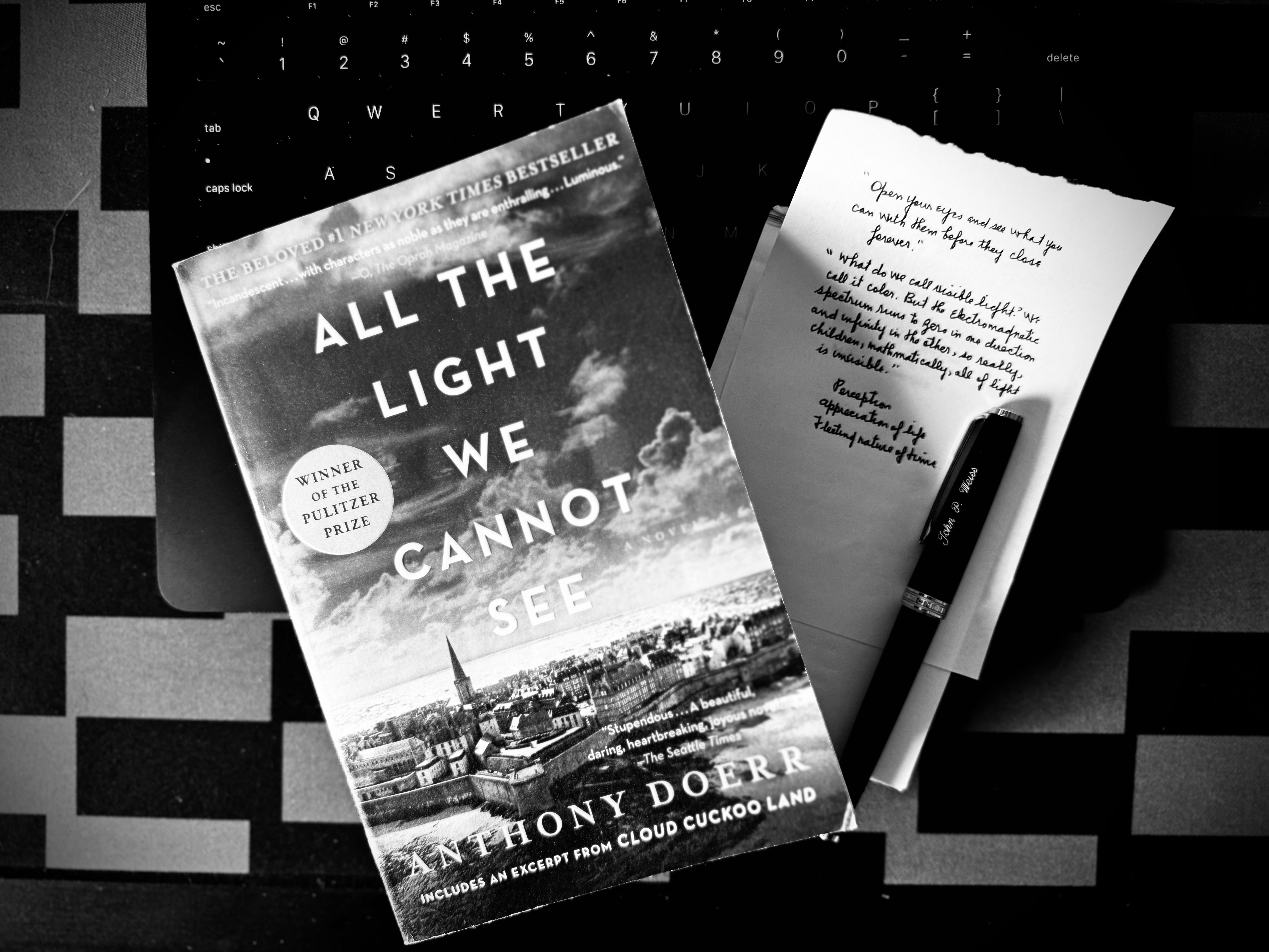
Whenever I travel, I take my Fujifilm X-Pro3 rangefinder-style camera. It rests by my hip, dangling from a thin leather strap. It’s unobtrusive, and I can quickly raise it when a subject or scene captures my attention.
I pair three small, discreet Fujifilm lenses with the camera. A 23mm f2, 35mm f2, and 50mm f2. The 23mm captures wider scenes, whereas the 50mm is great for isolating subjects. Most of the time I use the 35mm, which blends the qualities of the other two.
I also carry a tiny Ricoh GR IV point-and-shoot camera, which captures beautiful black-and-white images. The Ricoh is handy when I want something even more discreet to capture candid scenes.
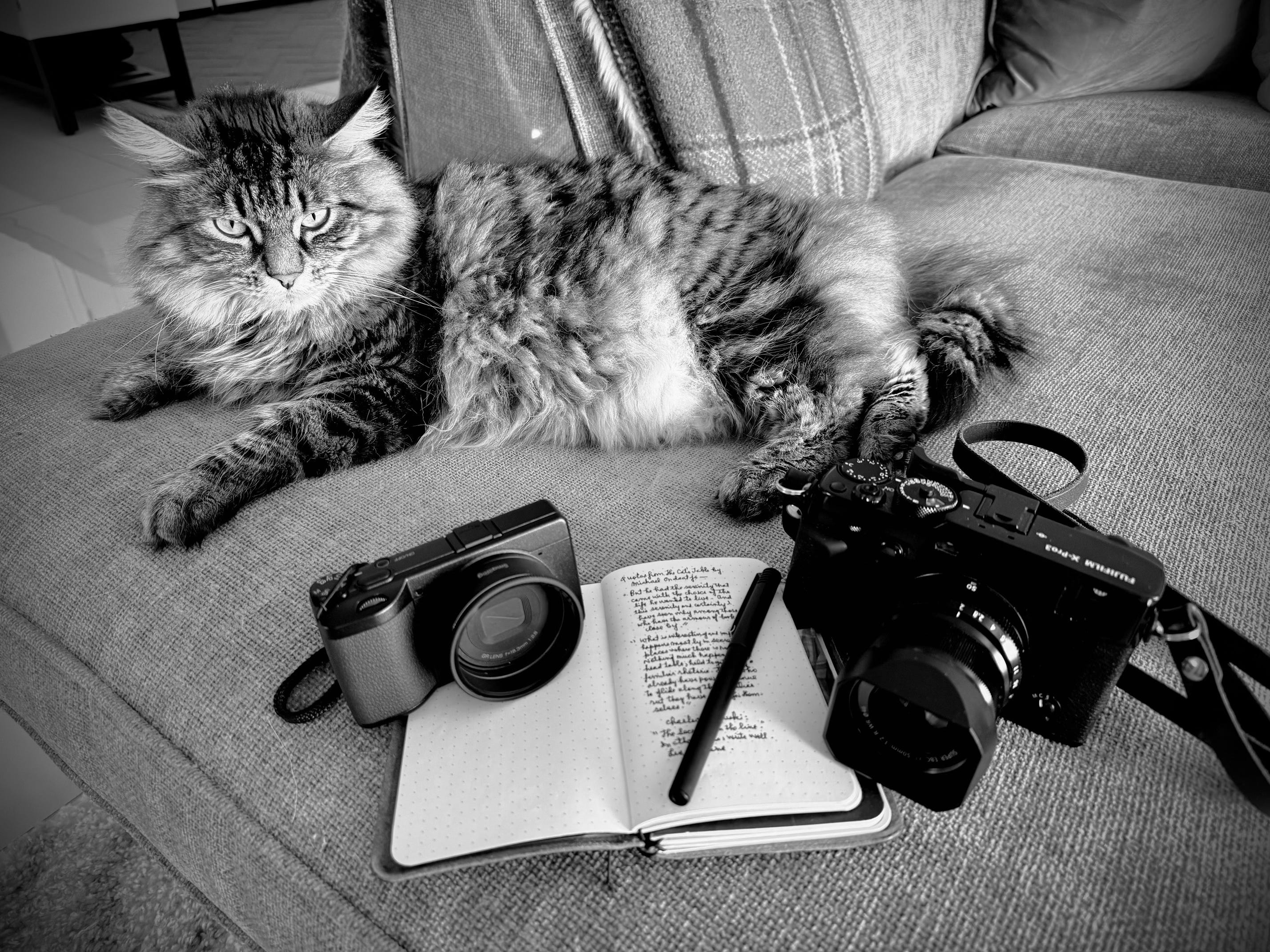
Street photography forces me to slow down and notice the world around me.
When I go on photo walks, I let my creative and aesthetic instincts take over. I study people, architecture, and the play of light and shadow. Sometimes I get lucky and amazing scenes unfold. Other times I get a whole lot of nothing.
But something else happens, too.
The people and scenes that capture my attention frequently spark images, memories, feelings, and the unfoldment of imagined stories. For this reason, I always carry a pen and notepad.
It’s not uncommon for me to snap an image and then immediately find a coffee shop to scribble down my thoughts, impressions, or even the nascent lines of a story. To be honest, sometimes I have no idea where the story came from. It’s as if I’m merely a conduit and the images were meant for me to observe. Once captured, something begins to whisper.
And if I’m quiet, it turns into a story.
I’m not a superstitious man. But I understand what creative thinkers like Rick Rubin mean when they talk about artists as antennas receiving ideas from a universal source.
Whether that’s true or not, developing a practice of closely noticing the world around you can lead to creative breakthroughs and deeper, more resonant work. It can also take your mind off the worries and vicissitudes of life, reviving your spirit and perhaps even your outlook on the present and future.
That’s the power of opening your eyes and noticing.
I was in San Francisco recently and spent time wandering the streets with my camera.
I noticed a woman wearing a sweater and cap, lugging a small cart behind her. As she crossed the street, I captured the moment. It was immediate and instinctual.
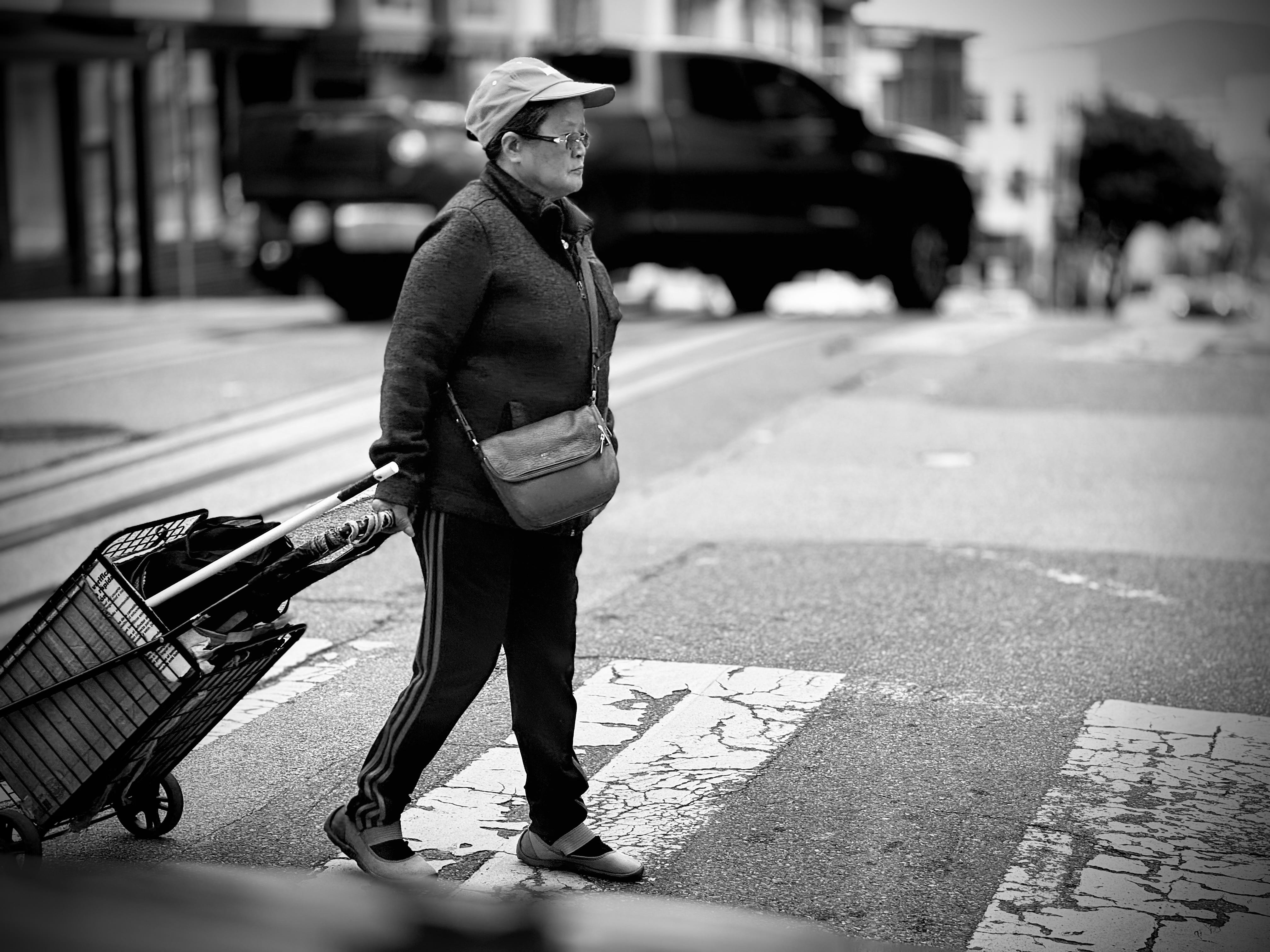
Later, when my wife and I stopped for lunch, I viewed the image and scratched the following thoughts in my pocket notebook:
“Mary came to me today on the busy streets of San Francisco. She came to me as a Chinese woman rolling her little cart through the bustle and noise and energy of Chinatown. And for a blessed moment, I felt her Irish spirit and the love and sweetness that defined her.”
Mary was my maternal grandmother.
She lived in a small apartment in Los Gatos, California, the town where I was raised. Whenever my parents and I drove into town, we’d often spot her strolling past the shops with her little cart in tow. Even in winter, she’d be bundled in a warm sweater and beanie, pulling her cart.
And so, when the writer in me photographs a Chinese woman in San Francisco with a shopping cart, I begin to conjure stories.
Stories of grandmothers and immigrants and ingredients bought in small shops and lugged home in handcarts. Ingredients to create meals inspired by the old country. Meals that comfort and preserve memory, reminders that no matter how much the world spins away from what’s familiar, one can still buy a few ingredients and find solace in yesterday’s dishes.
The random people and candid moments I photograph become inspiration for stories and essays. At the moment the aperture clicks, there’s no guarantee the image will unveil something deeper.
But when it does, it often feels as if it was meant to be.
Not far from Chinatown, a cowboy caught my attention.
I don’t know if he was a real cowboy or simply dressed like one. But something about his hat and jacket, set against concrete and glass and urban modernity, struck me.
He seemed like a man out of time.
Maybe he was a rancher on business in San Francisco, away from his Texas land. Perhaps he was thinking about his beloved quarter horse, Bouncer, anxious to get home, saddle up, and disappear into high grass trails that led to the peaceful creek behind his property.
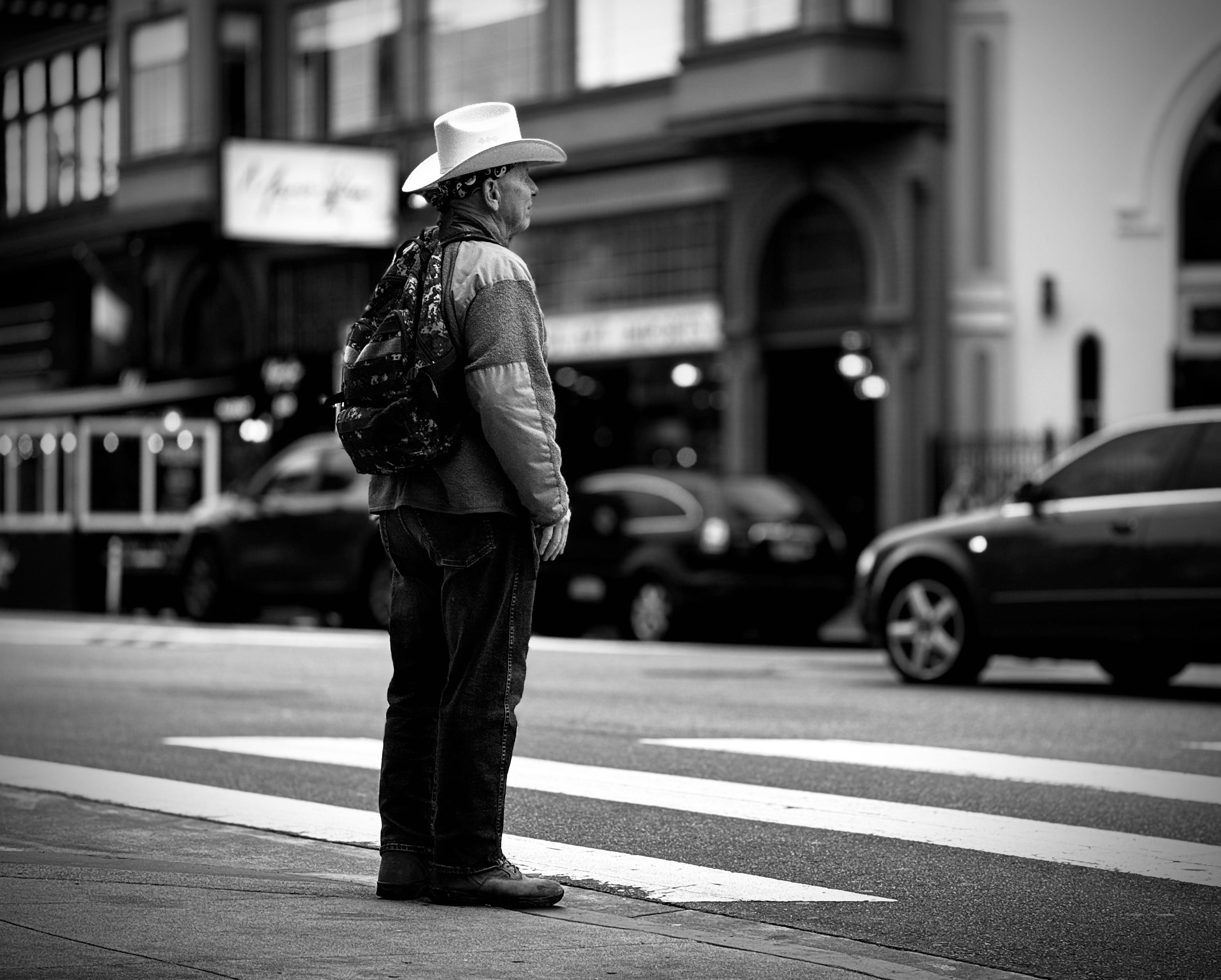
The city cowboy reminded me of Jonce Thomas, a real-life cowboy turned real estate developer who lived down the road from my parents’ house. As a boy, I would watch Jonce race his horse around barrels in the meadow behind his home. He had two quarter horses. One was named Texaco.
The other was named Bouncer.
Jonce was salt of the earth. He would do anything for anybody. He spoke slowly with a deep raspy voice burnished by years of cigarette smoke. And he carried a sadness in his eyes. He had gone into construction to make a living, and with his wife’s sharp business instincts, they built a company and made millions.
But I don’t think his heart was in it.
I think Jonce just wanted to ride horses. To disappear onto backcountry trails where life slowed and the sun and wind could cradle his soul in a kind of enduring serenity.
Somehow my cowboy-in-the-city photograph conjured all those memories.
This is how the art of noticing becomes a creative tool. It connects present observation to buried memory. Once those memories are unearthed, they awaken old feelings. Old dreams. Old hopes.
Those old feelings remind us where we’ve been, what we’ve seen, and perhaps where we want to go. There is a quiet peace in that. A sense of direction.
In this way, the art of noticing builds resilience.
We see in others how much we share. How the past shapes us all in different yet similar ways.
The art of noticing reminds us we are never truly alone.
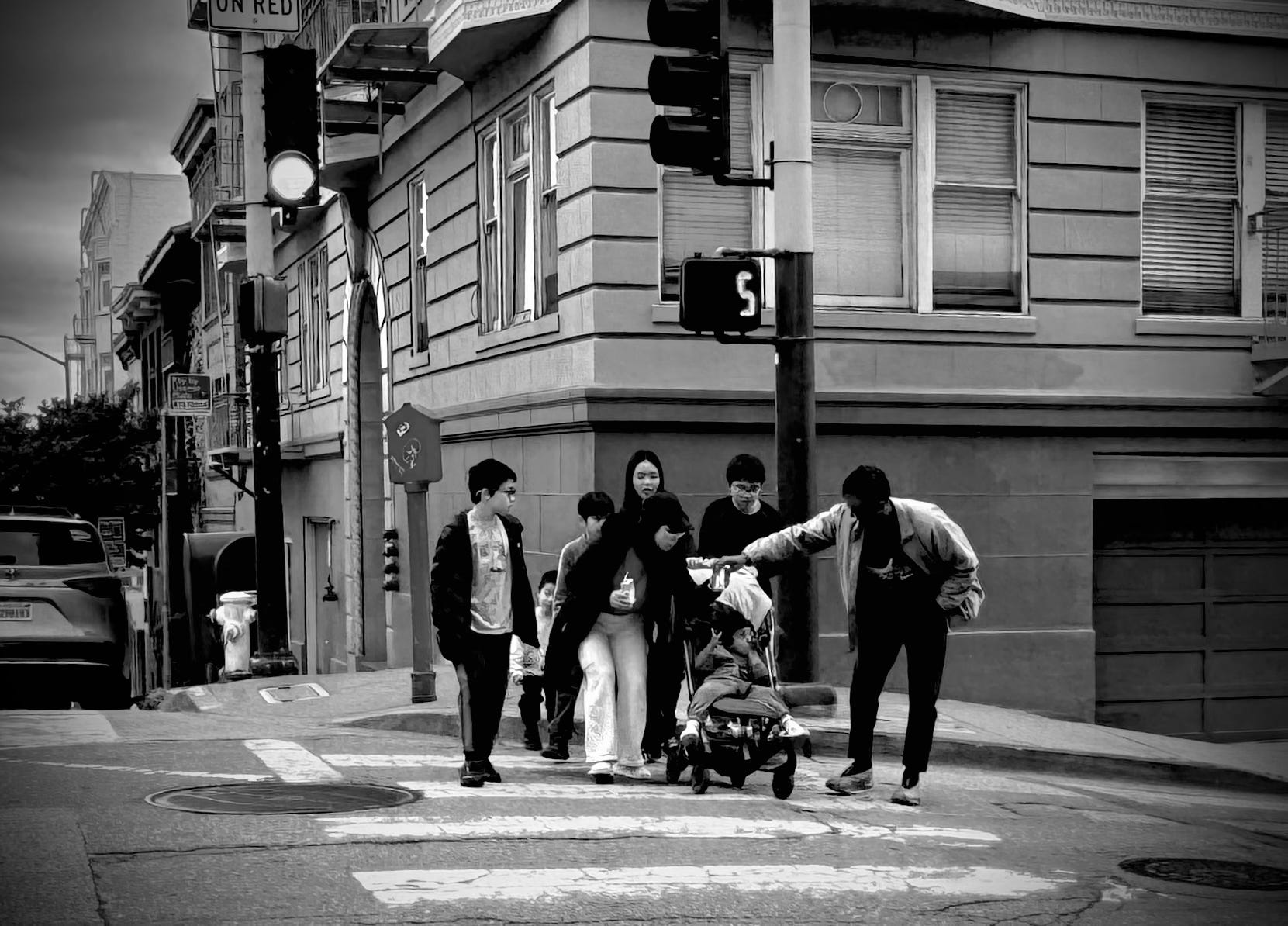
Near the end of my San Francisco trip, I watched a family preparing to cross a busy street. The group included adults, adolescents, children, and a toddler.
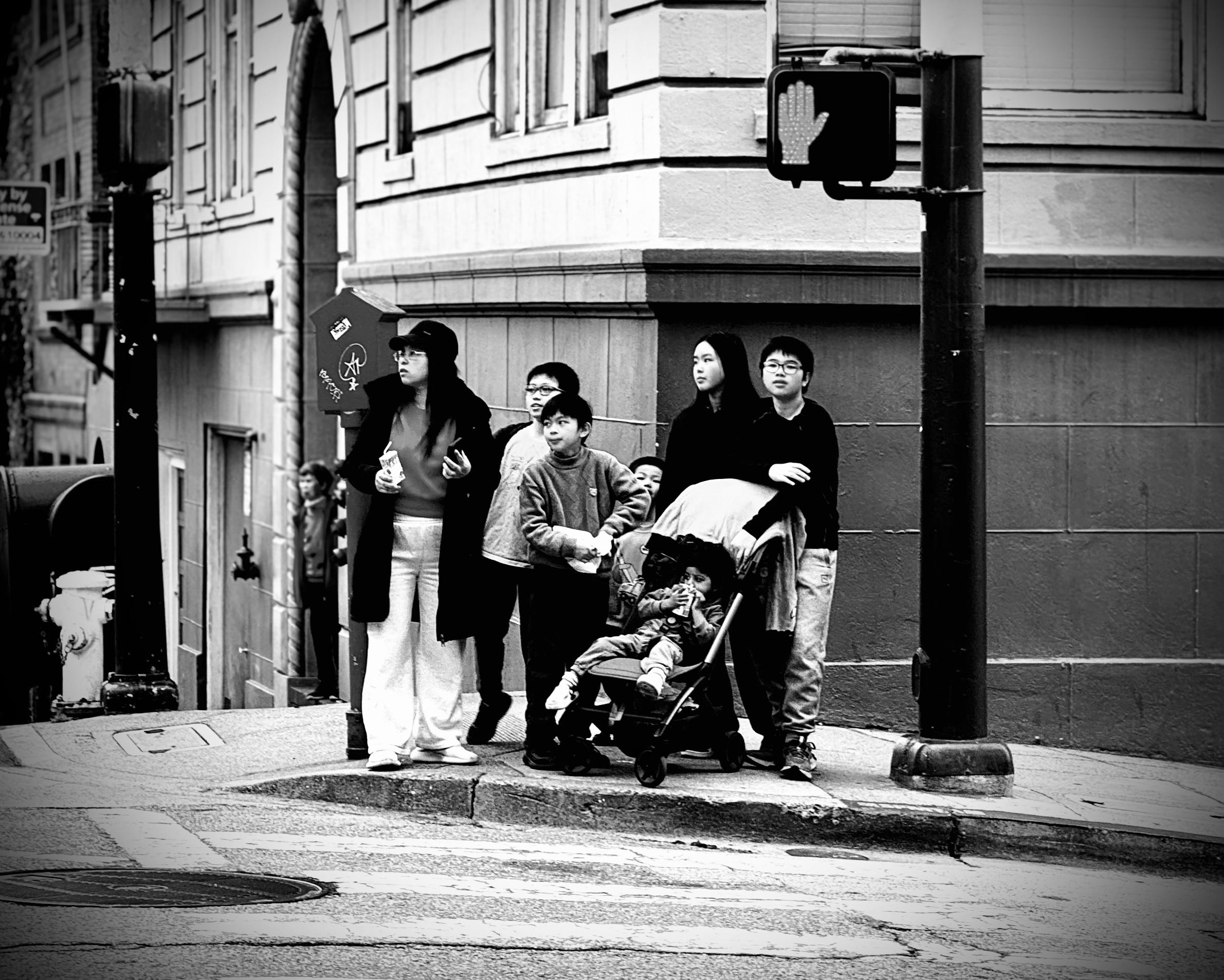
It was the toddler, giggling and waving a juice cup in his stroller, who sustained my attention.
He seemed to be having a grand time, unaware of the fast-moving cars and dangers inherent in any city. His family hovered nearby, keeping him safe and moving forward cautiously but confidently.
I remembered flying with my infant son to Washington, D.C.
I pushed his stroller past the Lincoln Memorial, the White House, the National Archives, and more. At one point, one of the stroller wheels broke, making everything more difficult. I was tired, frustrated, wary of traffic and commotion.
But my boy was having a ball.
He waved his little bag of Goldfish crackers and giggled at strangers and buildings. When ice cream fell onto my jeans, he laughed, which caused me to laugh.
There are stories in these moments.
There are stories in our noticings. It does not matter whether we find them through a camera lens, a sketchbook, or a travel diary.
The invitation is simply to slow down.
To settle into a place. To look around. To drink in the environment and the people and the unfolding stories. To let present moments brush against old memories.
If we allow it, something within us begins to awaken.
We begin to see our connection to others and to our past. We sense that we are part of a larger fabric. In that noticing, creativity stirs. In that noticing, resilience quietly grows.
When life is observed closely and with care, it becomes harder to believe we are alone. We share the same joys and sorrows, successes and failures. We are fragile souls doing our best to navigate our stories. Our paths differ, but we walk them together.
The radio voice was right. We only get so many openings and closings.
The world is already alive with scenes and people and small unfolding dramas. They wait patiently for someone to see them. And in seeing them, we sometimes see ourselves.
Open your eyes and see what you can with them before they close forever.
Before you go
This journal continues because a few readers quietly support it. If these pages matter to you, a small one-time gift below helps keep the work going. Thank you for reading.
Subscribe to Weiss Journal.
Visit my Noticings.
Great writing John, thanks. I’ve just spent a bit time on a break down by the coast, and just having the time and opportunity to sit back and observe people and watch the world go by, was one of the real pleasures. And drinking plenty of good coffee at the same time was a bonus too. Time to walk on the beach and let my mind freewheel for a bit. Seeing families with young kids bought back a lot of good memories of beach holidays past with our kids when they were little.
As always simple yet profound but beautifully stated !