
A Way of Keeping Yourself Alive
Something is returned

I was home from college one summer when my parents asked if I could help take my grandmother to her cancer treatments.
I said yes without hesitation. I had the time. Classes were behind me for the season, and my days were mostly open. I didn’t ask how serious her illness was. I think I already knew and didn’t want to face it.
She was living in a rented room by then, in the home of a family she did not belong to. I remember walking through their house to get to her bedroom door, feeling like an intruder in someone else’s life. It struck me, even then, that the world can narrow quickly. One day you have your own place, your own rhythm, your own say. And then, quietly, those things are taken from you.
She opened the door with a cigarette in her hand and a faint smile on her face. She had smoked her whole life and was not about to stop, not even now.
We did not talk about the illness on those drives. She talked about the people she lived with, about the food she did not like, about the noise at night. I listened.
“Why don’t you come and live with mom and dad?” I asked her.
“Oh no, I don’t want to be a burden. And I like my independence.” She sounded firm in her words, but then she gazed out the car window, and I wasn’t sure she meant it.
I didn’t like the hospital with its pale walls, buzzing lights, and antiseptic smell. The waiting rooms were filled with people who spoke in low voices or thumbed old magazines or stared at the walls. Some had a vacant defeat in their eyes. I was too young to understand what it must feel like to grow old inside a failing body.
One day, after her appointment, I asked if she needed to get back right away. She said no. I told her I wanted to take her somewhere. It was not much of a plan. Just a feeling that we should step outside the routine that had dimmed her days.
We drove to a park not far away. There was a small train there, the kind that carries children and their parents in a slow loop through trees and around a lake. She remembered the place. Said she had taken me there when I was little, though I had no memory of it. I helped her out of the car and she took my arm as we walked. She was weaker than I expected.
When she saw the train, something in her changed.
It was subtle at first. A softening around the eyes. Then a smile. We bought our tickets and climbed aboard. The train moved slowly through the park, past tall trees and open grass, past a lake where ducks drifted along the shoreline. Children laughed in the cars behind us. Somewhere ahead the whistle sounded and we could smell the smoke from the steam engine.
I thought of our visit as nothing special, at least not in the way we usually measure things. No grand gesture. No great expense. Just an afternoon in the sun.
But she smiled. She laughed once or twice. And for a little while, she seemed less like a patient and more like herself again.
I did not think of it in any larger way. I thought I had taken my grandmother on a train ride. That was all.
She died not long after.
My parents told me about my grandmother’s death on the day I graduated.
They had waited so I could finish my finals without distraction. I remember sitting on the edge of my dorm bed as they spoke, already knowing what they were going to say. Later that evening I walked to the campus duck pond and stood on the bridge, watching the water move under me. I thought about that day in the park. The train. The ducks. Her smile.
I cried, but not only from loss. There was something else there that I could not name.
Over the years, I have come to understand it better.
There is a passage in Richard Paul Evans’s novel The Walk that has stayed with me. A woman who works in a diner says she meets dead people every day. Not the buried kind, but the walking kind. People who have given up. People who have stopped growing, stopped feeling, stopped looking for anything beyond themselves.
I have seen that in my law enforcement career.
People who numb themselves. People who stop showing up for anyone else. People who have decided, consciously or not, that it is easier not to feel too much, not to risk too much, not to give too much. They are still here, but you sense the absence of something that once might have been.
I understand the temptation. Life does not unfold the way we imagine. It takes things from us. It disappoints. It wears us down. If you are not careful, you begin to pull back. You protect yourself by giving less. You tell yourself it is a kind of wisdom.
But I think there is another kind of wisdom, quieter and more demanding.
It has to do with continuing to care.
Not in some grand or abstract sense, but in the simple, inconvenient ways that present themselves to us. Showing up. Giving your time. Listening when it would be easier not to. Taking someone somewhere when you would rather stay home.
These things do not look like much from the outside. They rarely earn notice. But they do something to us.
They keep us from closing in. They keep us from becoming the kind of person who has stopped growing.
I thought I was doing something for my grandmother that summer. And I was. But I can see now that something was also being done for me. In caring for her, in stepping outside my own small concerns, something in me remained open. Without those small acts, I might have become harder, more distant, more inclined to turn inward.
We don’t always recognize the moments that shape us while we are in them.
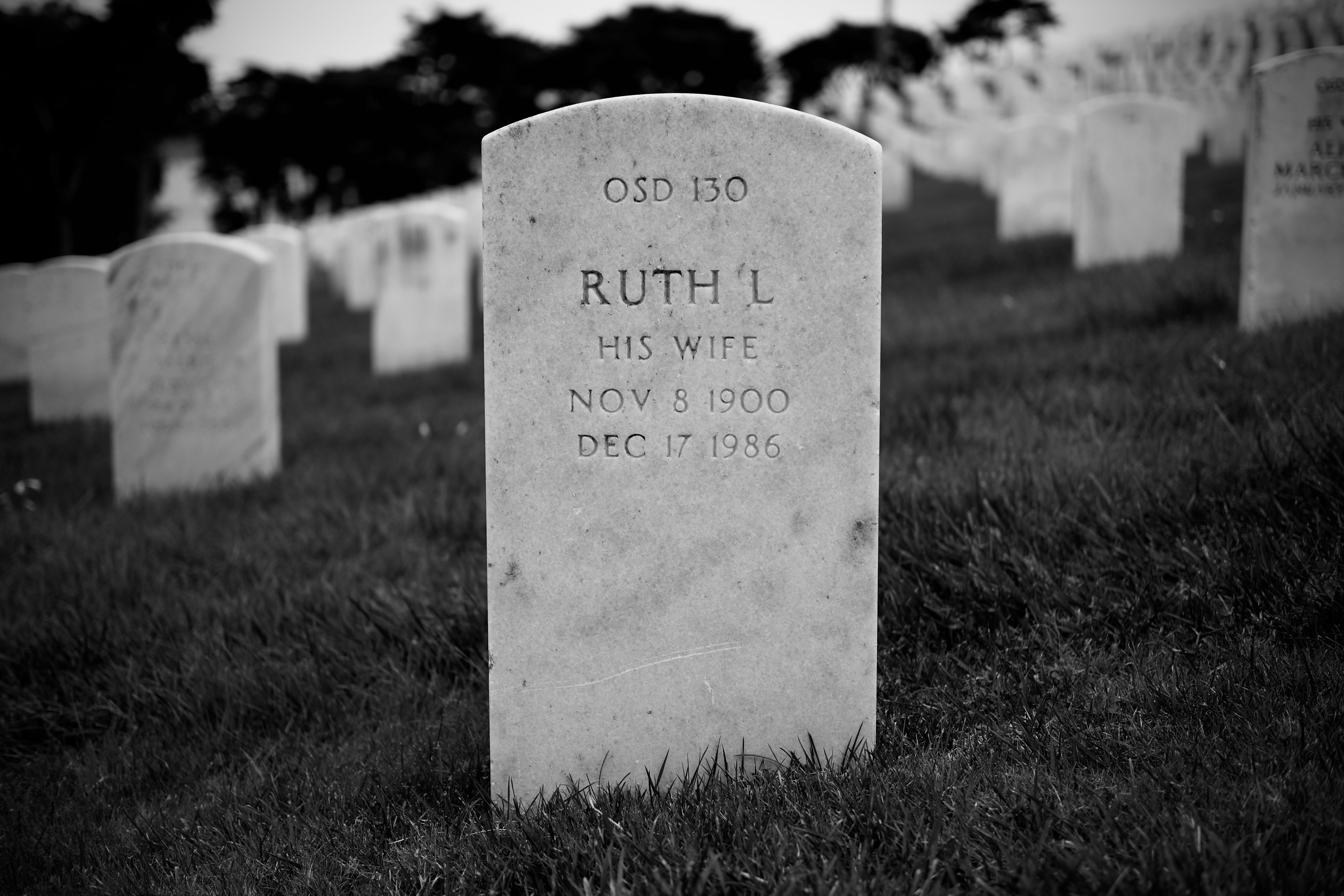
Months ago, I stood in the Presidio in San Francisco and looked at my grandparents’ gravestone for the first time.
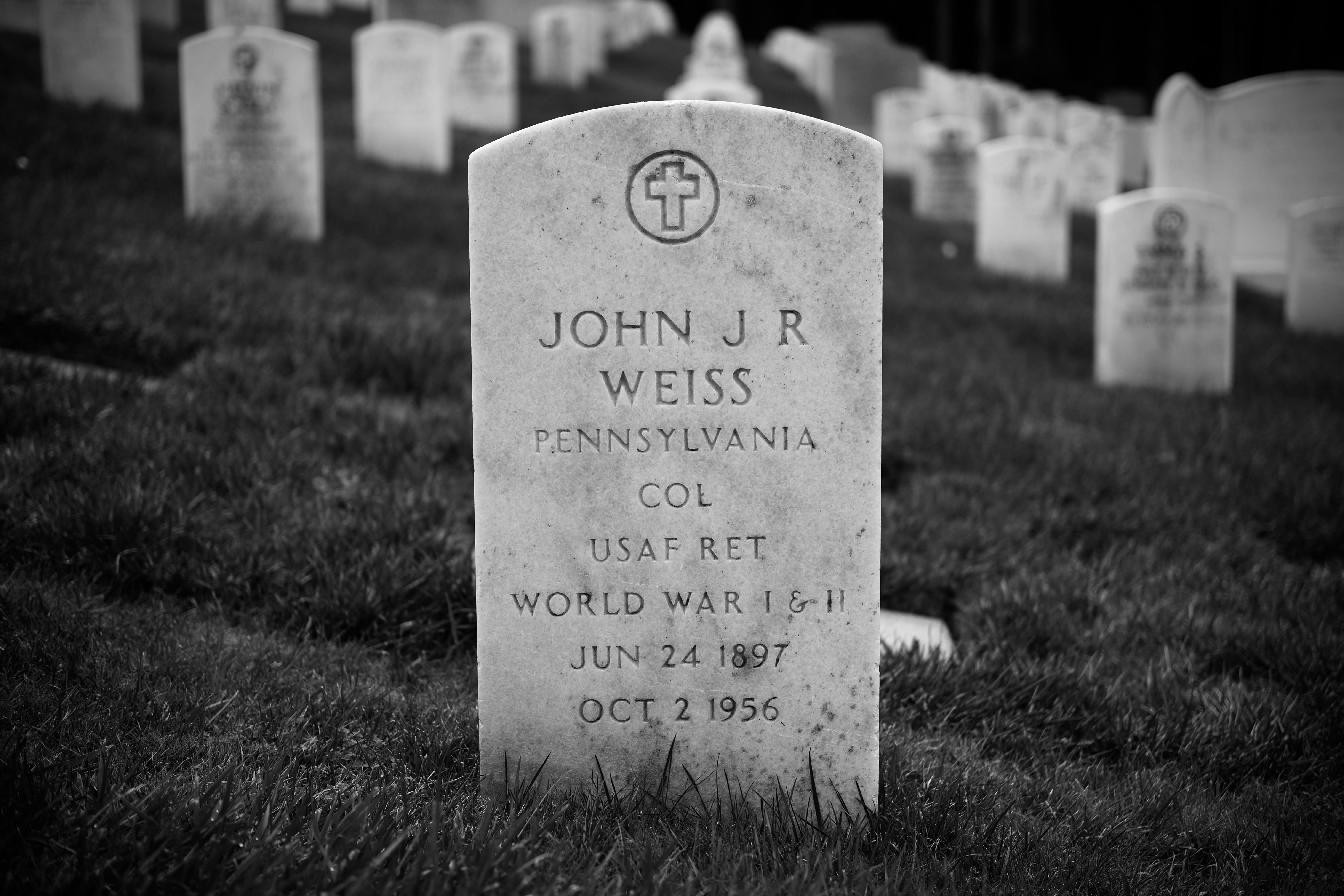
My grandfather’s name faces outward, his rank and service carved into the stone. I never knew him. On the back is my grandmother, Ruth L., identified simply as his wife, along with the dates that mark the span of her life.
I stood there for a while, thinking about how little can be said at the end. A name. A few facts. The rest disappears unless it lives somewhere else.
And what came back to me was not the hospital or the illness or the rented room.
It was the train.
The ducks on the water. The sound of the whistle. The way she smiled that afternoon as if something had been returned to her.
This much I know is true. The time you give to others is never wasted. It is not only a gift to them. It is a way of keeping yourself alive in the deeper sense. In a world that offers many ways to withdraw and go numb, it is one of the few things that pulls you back into the current.
Make time for the people who need you. Not someday. Not when it is convenient. Now.
You will bring them a measure of light. And some of it will remain with you.
Before you go
If these essays speak to you and you’d like to support my work, consider a one-time gift below. I’m grateful for your interest and support.
Subscribe to Weiss Journal.
Visit my Noticings.
As always, John, spot on. Yesterday was my 82nd birthday and I celebrated with friends and strangers, letting everyone know it was my special day—the bank clerk, other customers in the grocery store, and folks responded with cheerful smiles and best wishes. There was a time in my life when being numb felt like the safest option, but I am well over that. Thanks for sharing.
Beautifully stated. Thank you for the wise weekly reminders of living in the moment and the power of generosity in the simple things ♥️