
A Chest Full of Stacked Asteroids
He turned toward her and listened

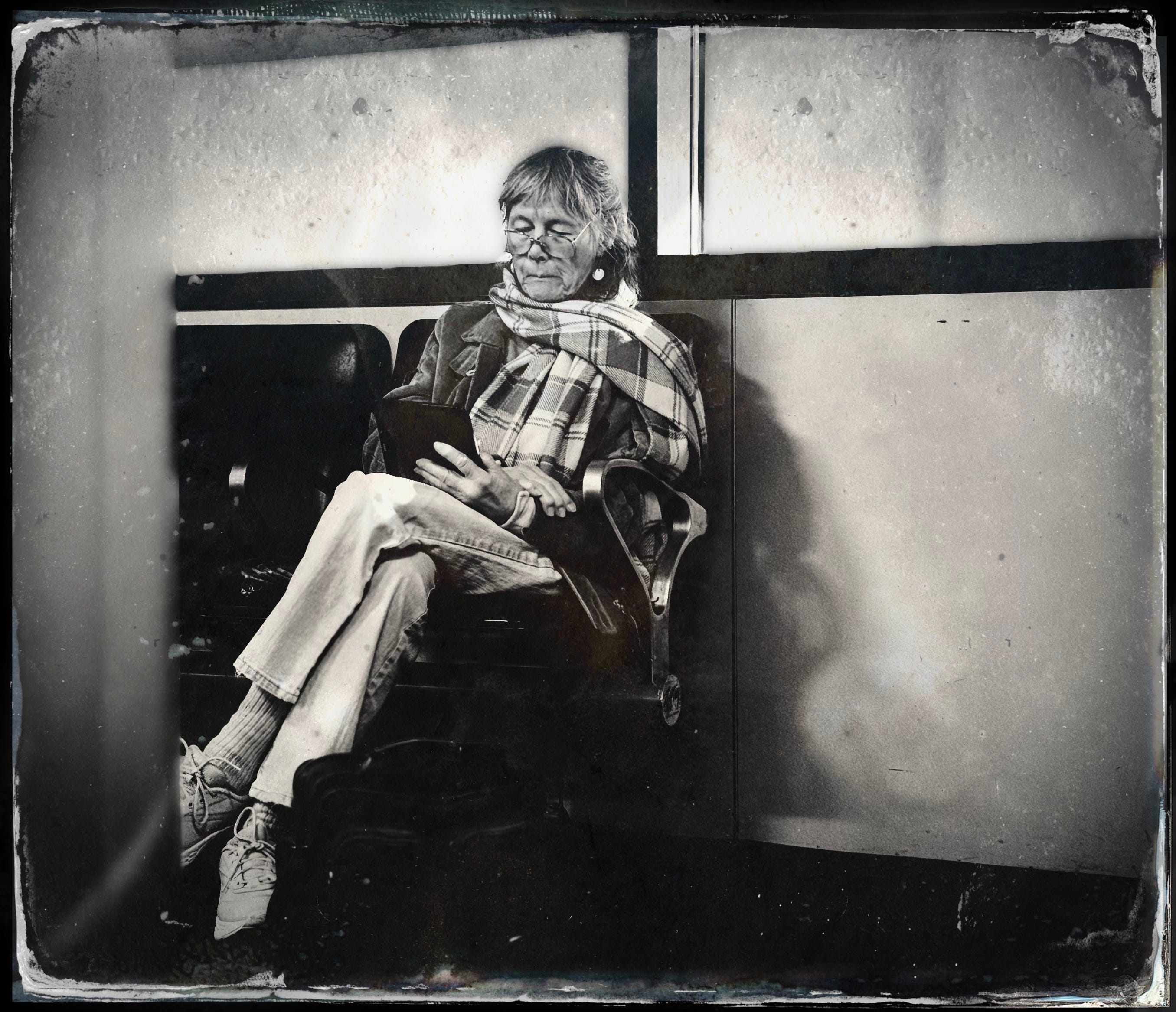
She taught English at St. Thomas Aquinas Preparatory School for thirty years, shaping young minds to appreciate great literature and maybe aspire to write some of their own. A few of her students went on to creative writing MFA programs. One, a young man named Lane Scott, got into the Iowa Writer’s Workshop, but then fell in love with a farmer’s daughter and left the program. What a waste, she thought, the boy had real promise.
But then the paths we imagine for others may suit us more than them.
Since retirement, life began to close in on her. Days in the garden and reading in her home library brought pleasure and escape from the empty stretch of days, but a nagging sense of isolation and irrelevancy bore into her mind and soul.
Her husband George passed five years ago and while she loved the man, she couldn’t say their marriage brought the kind of fulfillment she’d hoped for. He had been a chemical engineer. His mind and manner were linear, logical, and devoid of poetry or artful expression. Sometimes after dinner as he watched sports she would share a moving line of prose from whatever new novel had captured her attention. George would grab the TV remote, politely mute it, and turn to listen to her, giving her his full attention.
Such was the case one night when she said, “George, listen to this and tell me what you think. It’s from Mary Ann Fuller’s new novel, A Glimpse at Eternity.” George muted the TV, turned slightly to face his wife and said, “Fire away, my love.”
She adjusted her glasses and read:
“He had a chest full of stacked asteroids.”
“Stacked asteroids? What does that even mean?” he asked.
“Heavenly, out of this world physique. The beauty and perfection of supermodels or Michelangelo sculptures,” she said.
She closed the novel on her lap. “A chest full of stacked asteroids. What do you think about that line, George?”
“Don’t make no sense. Why not say he was muscular?”
“Well, sometimes a peculiar metaphor captures the essence of a thing better than literal description,” she said.
“Yeah but stacked asteroids? Sounds pretentious. The author is trying to be clever. Hemingway didn’t get all flowery with opaque metaphors.”
“Memory is hunger,” she said.
“What? Is that the next line? It’s worse than the chest full of asteroids,” he said with a chuckle.
“It’s from A Moveable Feast,” she said.
“Well, you got me there. All I know is asteroid muscles don’t make no sense to me. Guess I lack all that fancy metaphorical sophistication. I’m just a simple engineer, but I love you.”
He winked at her and clicked off the mute button. The football game filled the room again.
She got up and left.
The memory stayed with her. Not because of disappointment, she had known who George was when she married him, but because of something she could not quite name.
At school, she found what she thought she lacked. Colleagues like B. Thomas Lynch, whose quick wit and command of post-modern literature seemed to animate every conversation. Once, after drinks, she had almost gone home with him, but something in the way he turned every topic back toward himself unsettled her. And so she had remained with George.
Once, they watched The Bridges of Madison County, and she cried at the end.
“What’s gotten into you, honey?” George asked.
“Oh, nothing,” she said.
But she had not been thinking of Francesca. She had been thinking of Francesca’s husband.
The phone rang. It was her sister Ann in Coralville, Iowa.
“Come visit,” Ann said. “Your favorite author is going to be here next week, Mary Ann Fuller.” To her surprise, she said yes. On the flight, she read The Sense of an Ending, and as she looked out the window she thought how easily we misinterpret our lives, how often we fail to see them clearly.
Ann was waiting in a pickup truck outside the small airport. They hugged and talked easily on the drive back to Coralville. The late afternoon sun stretched across the open fields, its soft glow soothing and serene.
At the house, Ann’s daughter Allison came out to greet them, and soon they were all gathered in the kitchen. Later, they sat on the back deck with tea, looking out over Ann’s garden.
“Do you ever regret it?” she asked. “Leaving California. The plans you had.”
Ann smiled. “Sometimes. But not in the way I thought I would. Life just changed. Doug needed to come back after his father died. The business, his mother. It wasn’t the plan. But it became our life.”
“And you’re happy?” she asked.
Ann nodded. “Yes. I think if you don’t fight it, the life you end up with can become the life you were meant to live.”
That evening, Doug came home tired but cheerful, and they ate together at the kitchen table. There was nothing remarkable about it. No grand conversation, no performance. Just the easy movement of a shared life.
She watched them, the quiet familiarity between them, and felt something she could not quite name.
A few days later, after the Mary Ann Fuller reading, she sat alone in a campus coffee shop with a vanilla latte. The room hummed with quiet conversation. She closed her eyes and saw George across from her.
“Hold on,” he said. “Let me mute this so I can give you my full attention.”
She saw it clearly now, the way he turned toward her, not halfway but fully, the way he listened without interrupting, without needing to respond. The memory brought tears.
“Are you alright?” a voice asked.
She looked up. “My goodness… Lane Scott?”
“In the flesh,” he said, smiling.
They sat together with their coffee and talked about old days at the school. She told him how often she had thought about him over the years.
“I never understood why you left the Workshop,” she said. “You were so talented.”
“I fell in love,” he said.
“With Penny. I remember.”
He nodded. “I think I just wanted a life that felt real to me.”
“Do you ever miss it? Writing?”
“I still write,” he said. “Just… differently.”
They sat for a moment.
“Your husband,” Lane said. “I remember him bringing pizzas to that poetry night when the caterer didn’t show. He was a good man.”
She nodded. “Yes. He was.”
Weeks later, on a quiet Saturday morning, she was in the garden. She planted a few bulbs, wiped her hands on her jeans, and went inside for a glass of lemonade. In the library, she picked up A Glimpse at Eternity and turned to the page she had marked years ago.
He had a chest full of stacked asteroids.
She read it again, more slowly this time, letting the words settle. Then she closed her eyes and saw George seated across from her, the television muted, his body turned toward her, waiting.
“I’m just a simple engineer,” he had said. “But I love you.”
She had spent a lifetime teaching others how to read, and had somehow failed to read the man who sat beside her.
Outside, chickadees moved in and out of the feeder George had built years ago. She cut a few flowers and tied them with twine, then stood for a moment holding them in her hands.
She would drive out to the cemetery. Not to explain anything. Not to correct anything.
Only to sit with him a while.
Note: The line “a chest full of stacked asteroids” came to me in a dream. It made sense then, the way things make sense in dreams. I wrote it down when I woke and kept it, not knowing what it meant, only that it felt like something.
Before you go
If these essays speak to you and you’d like to support my work, consider a one-time gift below. I’m grateful for your interest and support.
Subscribe to Weiss Journal.
Visit my Noticings.
My husband died six weeks ago, I am remembering moments and some of them hurt, then a few days later, having read something in his journals or on-line, a new meaning presents itself and love surfaces. Thank you for capturing that in your writing today.
I often shared your weekend pieces with him and together we appreciated your reflections and your humanity. Some even made their way into sermons!
Thank you for sharing your life and experiences through your pen.
Every once in awhile I read something that stays with me in the part of my mind that is eternal memory. Sometimes something I read becomes part of the catalog of moments I refer to, and pull back up and look at, when I'm thinking what does my life mean. It's a gift when something I read becomes part of what I reflect on when I measure what's important, and where is this path I'm on taking me.